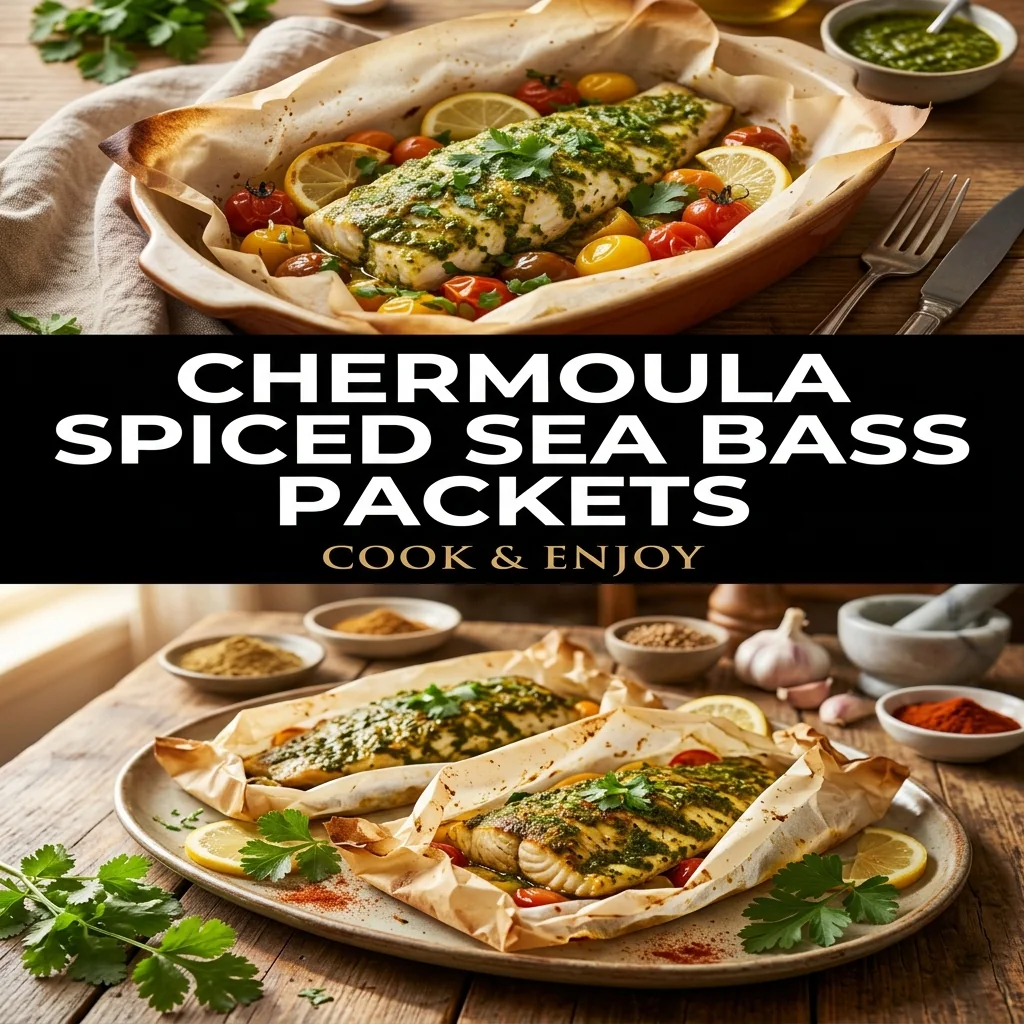
WHY MAKE IT
A little comfort, a lot of flavor.
Chermoula Spiced Sea Bass Packets showcase the traditional North African herb blend paired with the delicate, buttery profile of fresh sea bass. Baking seafood en papillote (in parchment paper) creates a self-contained steaming chamber where moisture, citrus, and aromatics circulate continuously. Chermoula—a vibrant blend of fresh herbs, warm cumin, sweet paprika, and preserved lemon—penetrates deep into the fish as it cooks, keeping the flesh moist and aromatic. Accompanied by sweet bell peppers that cook directly in the savory herb-infused juices, this dish offers an elegant, healthful meal with minimal cleanup, making it suitable for both casual dining and special occasions.
The Essence of Chermoula Herb Paste
Chermoula is a foundational Moroccan marinade traditionally paired with seafood. Its distinctive flavor stems from balancing large quantities of fresh cilantro and parsley with warm spices like cumin and paprika. Using extra-virgin olive oil helps carry these fat-soluble flavors deep into the fish flesh. The minced peel of preserved lemon provides a concentrated, floral salinity that fresh lemon juice alone cannot replicate. Be sure to discard the bitter inner pulp of the preserved lemon, using only the tender, cured outer peel to maintain a bright, savory finish.
The Science of Cooking en Papillote
Baking fish inside a sealed parchment pouch utilizes both conductive heat from the oven and convective heat from expanding steam. As the sea bass and sweet peppers heat up, their natural juices vaporize within the confined space. This gentle, humid environment cooks the fish evenly at 400 F / 200 C without scorching or drying out delicate proteins. The technique requires no added broths or heavy fats, relying on the fish's own juices and olive oil to create a light, fragrant pan sauce inside the pouch.
Presentation and Accompaniments
Serving seafood in individual parchment packets creates an engaging dining experience, as guests cut open the paper at the table to release the fragrant cloud of cumin, garlic, and citrus. The steaming process leaves a pool of rich herbal broth at the base of each packet. Serve alongside steamed couscous, warm crusty bread, or fluffy quinoa to absorb every drop of the seasoned cooking juices. A simple cucumber and tomato salad offers a cool, crisp companion to the warm spices.
Before you start
Sealing the parchment packets tightly is crucial for trapping steam and ensuring the fish cooks through gently. Begin crimping at one folded edge, making overlapping small folds all the way around the curve like a hand pie. If parchment paper is difficult to crease, fold firmly with your thumb. Sea bass is naturally rich in healthy fats, which keeps it exceptionally succulent during parchment baking.
THE RECIPE
Chermoula Spiced Sea Bass Packets
4 servings · 20 minutes preparation · 18 minutes cooking · 2 minutes cooling, chilling or resting
Ingredients
Step-by-step instructions
- Preheat the oven to 400 F / 200 C and prepare four large sheets of parchment paper, approximately 15x12 inches each.
- In a medium bowl, prepare the chermoula by whisking together the chopped cilantro, flat-leaf parsley, minced garlic, ground cumin, paprika, crushed red pepper flakes, olive oil, lemon juice, minced preserved lemon peel, 1/2 teaspoon salt, and 1/4 teaspoon black pepper.
- Toss the sliced red bell pepper, yellow bell pepper, and red onion strips in a separate bowl with 2 tablespoons of the prepared chermoula and 1/4 teaspoon kosher salt.
- Fold each sheet of parchment paper in half to crease the center, then unfold and lay flat on your work surface.
- Divide the seasoned bell pepper and onion mixture evenly among the center of each parchment sheet.
- Season the sea bass fillets with the remaining 1/4 teaspoon salt and 1/4 teaspoon black pepper, then place one fillet on top of each vegetable mound.
- Spoon the remaining chermoula generously over each sea bass fillet, coating the top and sides evenly.
- Fold the top half of the parchment paper over the fish, then pleat and crimp the edges tightly together from one side to the other, creating a sealed, half-moon-shaped pouch.
- Place the four packets on a large rimmed baking sheet and bake at 400 F / 200 C for 18 minutes until the packets are puffed and the internal temperature of the fish reaches 145 F / 63 C.
- Remove from the oven, let rest for 2 minutes, then transfer packets to dinner plates and carefully cut open the paper with scissors, watching for escaping hot steam.
Kitchen notes
Sealing the parchment packets tightly is crucial for trapping steam and ensuring the fish cooks through gently. Begin crimping at one folded edge, making overlapping small folds all the way around the curve like a hand pie. If parchment paper is difficult to crease, fold firmly with your thumb. Sea bass is naturally rich in healthy fats, which keeps it exceptionally succulent during parchment baking.
Storage & make-ahead
Promptly refrigerate any leftover sea bass and vegetables removed from the parchment packets within 2 hours in a sealed container for up to 2 days. To reheat safely, place the fish and vegetables in a small baking dish, cover tightly with foil, and heat in a 350 F / 175 C oven until hot and reaching an internal temperature of 165 F / 74 C.
An original recipe guide inspired by themes in our Pinterest research. Recipe has not been independently kitchen-tested. AI-generated image is illustrative; your finished dish may look different.
Frequently asked questions
What if I cannot find preserved lemon?
If preserved lemon is unavailable, substitute with 1 teaspoon of freshly grated regular lemon zest combined with an extra 1/4 teaspoon of kosher salt. While missing the unique fermented floral complexity, this substitution provides necessary citrus brightness.
Can I use aluminum foil instead of parchment paper?
Yes, heavy-duty aluminum foil can be used to create the sealed packets. Fold the edges securely to ensure an airtight seal so the steam remains trapped during baking, maintaining the same 18-minute cooking duration at 400 F / 200 C.
How do I test the fish for doneness inside the packet?
Insert a digital instant-read thermometer through the paper directly into the thickest center of the fish fillet. The sea bass is properly cooked when it registers 145 F / 63 C and the parchment packet is puffed with steam.


