WHY MAKE IT
A little comfort, a lot of flavor.
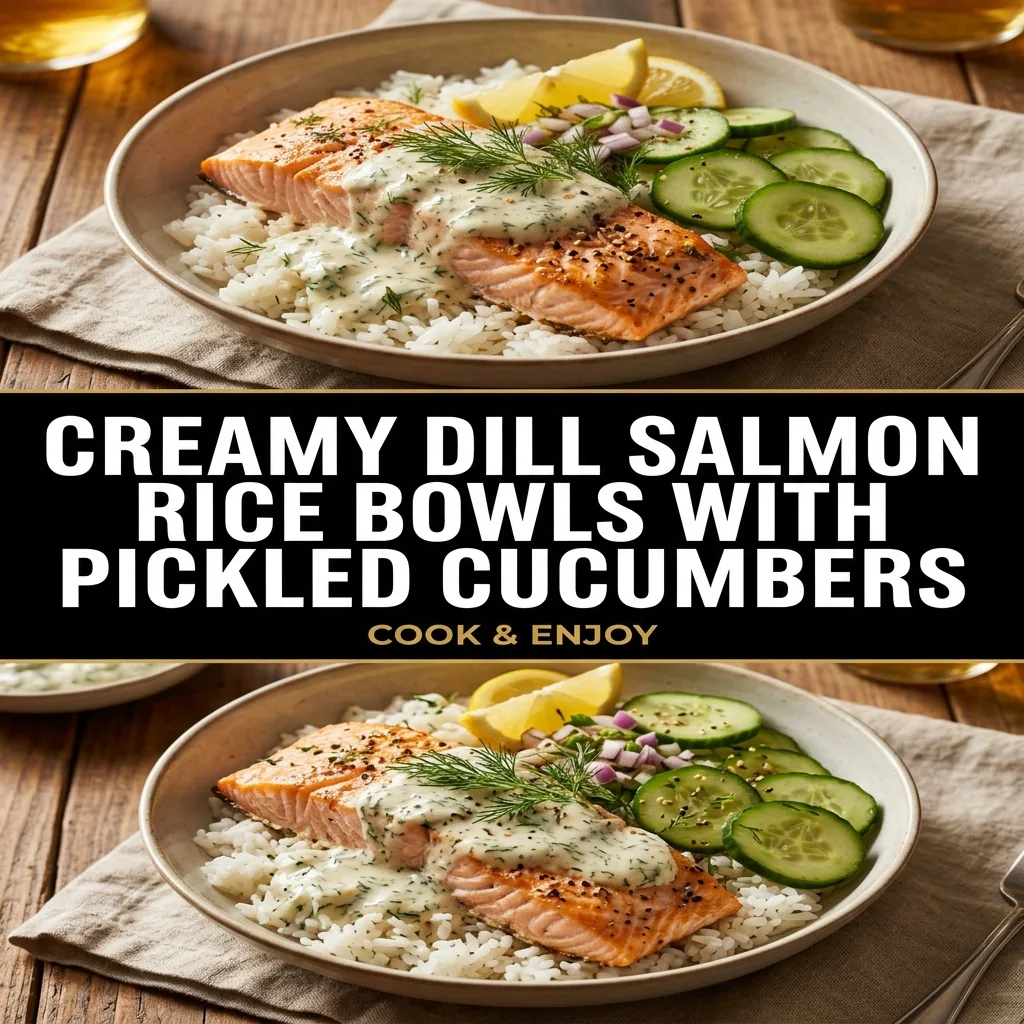
These vibrant seafood bowls bring together warm, tender roasted salmon and comforting short-grain sushi rice with brisk, refreshing accents. The salmon is seasoned lightly and roasted just until moist and tender, providing a rich, savory foundation. To balance the natural oiliness of the fish, crisp ribbons of English cucumber steep in a gentle sweet-tangy vinegar brine, adding immediate textural crunch. A velvety sauce crafted from halal-certified whole-milk Greek yogurt, pungent fresh dill, and raw grated garlic ties the grains and fish together with cooling sharpness. Because each element can be prepared concurrently while the rice simmers, this balanced dinner comes together smoothly without requiring complicated culinary maneuvers.
Rice Preparation and Texture
Achieving the ideal texture for short-grain sushi rice requires diligent rinsing to strip away excess surface starch. Swirl the grains vigorously in a bowl of cold water, draining and repeating until the liquid runs clear. Cooking with a strictly measured ratio ensures plump, cohesive grains that hold up under creamy sauces without becoming mushy. Resting the pot off the heat with the lid on allows trapped steam to finish cooking the core of each kernel evenly. Fluff the rice gently with a wide paddle rather than mashing it with a spoon.
Cooking Salmon to Safety
Salmon fillets should always be roasted with attention to heat control so they retain their natural moisture. Baking at 400 F (204 C) creates a delicate exterior crust while keeping the interior juicy. Always use a digital culinary thermometer inserted into the thickest part of the fillet to confirm the meat reaches the regulatory safe internal threshold of 145 F (63 C). Once the fish hits this benchmark, take it out immediately; overcooking causes albumin proteins to purge rapidly, drying out the fish and diminishing its tenderness.
Balancing the Creamy Dressing
The dill yogurt sauce functions as an emulsified bridge between the rich fish and the acidic pickles. Using whole-milk Greek yogurt provides adequate fat and body, preventing the sauce from running watery over warm rice. Fresh dill delivers a grassy, aromatic punch that dried herbs cannot replicate. The addition of fresh lemon juice cuts through the dairy fat, while freshly grated garlic offers a warm bite. Whisk the dressing thoroughly until glossy, and keep it chilled right up until plating to retain peak texture.
Before you start
For the best presentation and texture, slice the cucumber into very thin ribbons using a standard Y-peeler, stopping once you reach the soft seeded core. Ensure you drain the cucumber ribbons thoroughly before assembling each bowl so excess pickling liquid does not dilute the rice base or thin the thick dill yogurt dressing.
THE RECIPE
Creamy Dill Salmon Rice Bowls with Pickled Cucumbers
4 servings · 20 minutes preparation · 25 minutes cooking · 15 minutes cooling, chilling or resting
Ingredients
Step-by-step instructions
- Rinse 1.5 cups sushi rice in a fine-mesh strainer under cold running water until the runoff is clear, then combine it with 2 cups cold water in a medium saucepan over medium-high heat.
- Bring the rice to a full boil, immediately cover with a tight-fitting lid, lower the heat to low, and cook undisturbed for 15 minutes before removing from heat to rest covered for 10 minutes.
- In a small mixing bowl, whisk together 0.33 cup unseasoned rice vinegar, 1 tablespoon granulated sugar, and 0.5 teaspoon sea salt until dissolved, then submerge the shaved cucumber ribbons and let stand for 15 minutes at room temperature.
- Preheat the oven to 400 F (204 C) and line a rimmed baking sheet with unbleached parchment paper.
- Place the salmon portions on the prepared baking sheet, brush evenly with 1 tablespoon olive oil, and season thoroughly with 0.5 teaspoon sea salt and 0.5 teaspoon black pepper.
- Roast the salmon in the center oven rack for 12 to 14 minutes until the flesh flakes gently with a fork and registers an internal temperature of 145 F (63 C) on an instant-read thermometer.
- In a medium bowl, whisk together 1 cup Greek yogurt, 0.25 cup chopped dill, grated garlic, 2 tablespoons lemon juice, and the remaining 0.25 teaspoon sea salt until completely smooth.
- Flake the warm roasted salmon into large bite-sized chunks using two clean forks.
- Divide the warm cooked sushi rice evenly among four wide shallow bowls, arrange flaked salmon and drained pickled cucumber ribbons over the surface, drizzle generously with the dill yogurt sauce, and sprinkle with toasted sesame seeds.
Kitchen notes
For the best presentation and texture, slice the cucumber into very thin ribbons using a standard Y-peeler, stopping once you reach the soft seeded core. Ensure you drain the cucumber ribbons thoroughly before assembling each bowl so excess pickling liquid does not dilute the rice base or thin the thick dill yogurt dressing.
Storage & make-ahead
Transfer leftover components into separate airtight containers and refrigerate promptly within 2 hours. Store the pickled cucumbers and yogurt sauce chilled for up to 3 days, and cooked salmon and rice for up to 2 days. Reheat the salmon and rice thoroughly to at least 165 F (74 C) before serving cold toppings.
An original recipe guide inspired by themes in our Pinterest research. Recipe has not been independently kitchen-tested. AI-generated image is illustrative; your finished dish may look different.
Frequently asked questions
Can I prepare the pickled cucumbers ahead of time?
Yes, you can pickle the cucumbers up to 24 hours in advance. Store them sealed in an airtight glass container in the refrigerator. Over time they become softer, so if you prefer a crisp crunch, pickle them between 15 and 30 minutes before meal assembly.
What is the best way to flake roasted salmon?
Allow the roasted fillets to rest for two minutes out of the oven. Use two dinner forks to gently pull the flesh along its natural grain lines into large, distinct flakes, which preserves moisture better than shredding it into tiny shreds.
Can I use low-fat yogurt for the sauce?
Low-fat yogurt works, but whole-milk Greek yogurt yields a much creamier mouthfeel and coats the rice better. If using low-fat yogurt, strain any standing whey first to prevent the dill sauce from separating over warm ingredients.


