WHY MAKE IT
A little comfort, a lot of flavor.
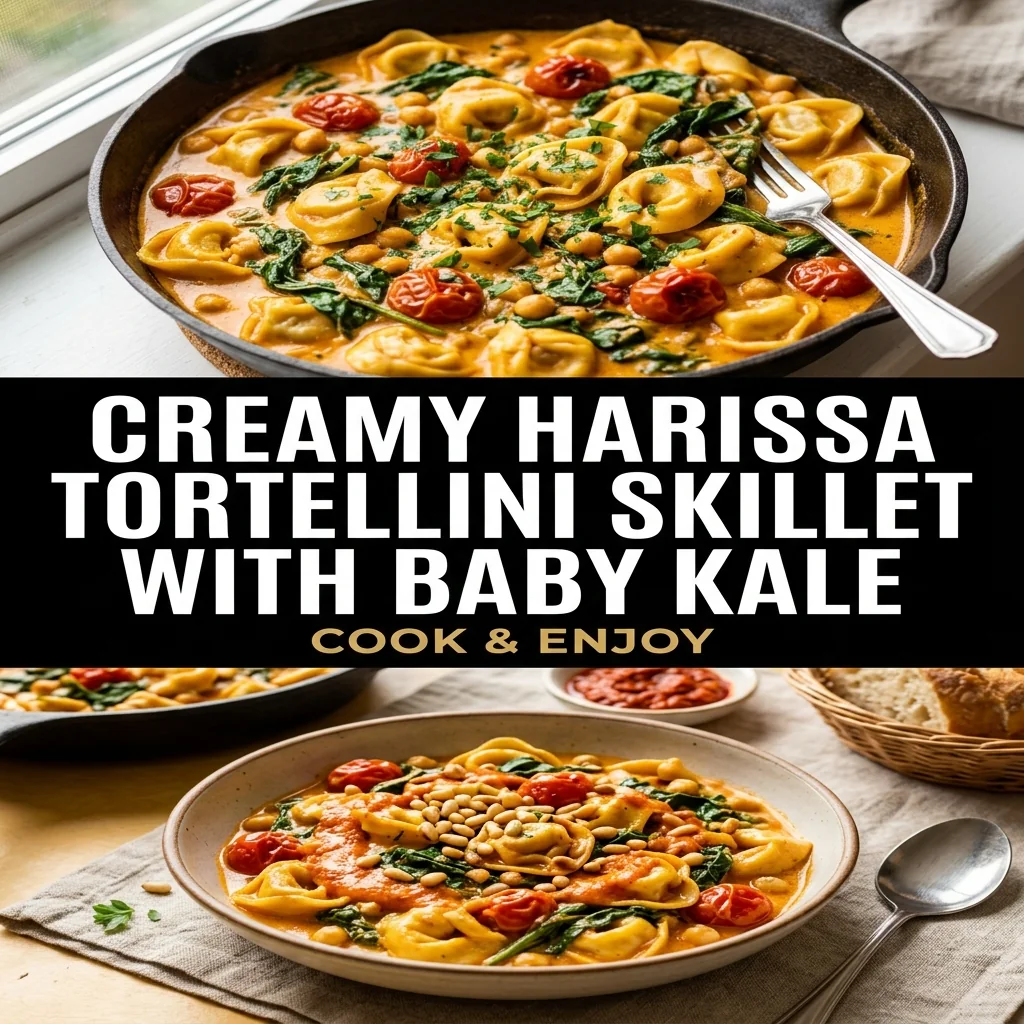
This creamy harissa tortellini skillet bridges Italian stuffed pasta with the bold, smoky warmth of North African harissa paste. Prepared in a single skillet after a quick par-boil of the tortellini, the dish comes together in twenty-five minutes, making it suitable for busy evenings. Cheese-filled tortellini provides a soft, savory pocket that soaks in a luscious tomato sauce enriched with heavy cream and aromatic garlic. Mild harissa introduces notes of roasted red peppers, caraway, coriander, and cumin, giving the classic blush sauce an intriguing depth. Tender baby kale wilts seamlessly into the folds of pasta, providing pleasant color and balancing the velvety richness of the cream and cheese.
Understanding Harissa Paste
Harissa is a North African chili paste typically crafted from roasted red peppers, hot chili peppers, garlic, olive oil, and toasted spices like cumin, coriander, and caraway. When heated in olive oil with aromatics, the spices bloom and distribute their distinctive earthy fragrance throughout the pan. Choosing a mild or medium harissa paste allows the complex botanical notes of coriander and caraway to shine through without overwhelming the palate with raw heat. The sweetness of fire-roasted canned tomatoes perfectly complements this smoky profile.
Achieving a Stable Cream Sauce
Combining acidic tomatoes with heavy dairy cream requires gentle handling to prevent curdling. Simmering the crushed fire-roasted tomatoes and vegetable broth first concentrates their flavors and reduces free water. Lowering the heat to medium-low before whisking in high-fat heavy cream ensures a stable, smooth emulsion. Heavy cream has enough milk fat to withstand mild acidity from tomatoes and lemon juice, producing a velvety rose sauce that clings evenly to the tortellini.
Selecting Cheeses with Halal Rennet
When purchasing pre-made cheese tortellini and parmesan cheese, it is essential to verify that the enzymes used during curdling are microbial or vegetarian rennet rather than animal-derived rennet from non-halal sources. Many commercial tortellini brands explicitly state the use of microbial enzymes on the packaging. Halal-suitable parmesan adds sharp, crystalline umami to the sauce off the heat, melting softly into the cream without becoming greasy or separating.
Before you start
Par-boil the refrigerated tortellini for only 2 to 3 minutes rather than the full package time. The pasta finishes cooking directly in the simmering harissa cream sauce, absorbing the smoky, spiced tomato flavors without turning mushy. Baby kale is preferred over mature curly kale because its tender leaves wilt in just two minutes without requiring pre-steaming or stripping tough ribs.
THE RECIPE
Creamy Harissa Tortellini Skillet with Baby Kale
4 servings · 10 minutes preparation · 15 minutes cooking
Ingredients
Step-by-step instructions
- Bring a large pot of water to a boil over high heat, season with 1 tablespoon of salt, add 16 oz refrigerated cheese tortellini, and boil for 3 minutes until barely tender; drain and set aside.
- Heat 2 tablespoons extra virgin olive oil in a deep 12-inch skillet over medium heat.
- Add 1 finely minced small yellow onion and cook for 4 to 5 minutes until soft and translucent, stirring frequently to prevent browning.
- Stir in 3 minced garlic cloves and 2 tablespoons mild harissa paste, cooking for 90 seconds until the spices release their fragrant aroma and the oil turns a deep red-orange color.
- Pour in 1 can (14 oz) crushed fire-roasted tomatoes and 1/2 cup halal vegetable broth, stirring well to combine with the aromatics.
- Bring the sauce to a gentle simmer over medium heat and cook uncovered for 4 minutes until slightly thickened.
- Reduce heat to medium-low, pour in 3/4 cup heavy cream, 1/2 teaspoon sea salt, and 1/4 teaspoon black pepper, whisking continuously for 1 to 2 minutes until a silky, uniform rose-colored sauce forms.
- Add 4 cups packed fresh baby kale and the par-cooked cheese tortellini to the skillet, stirring gently for 2 to 3 minutes until the baby kale wilts into the sauce and the tortellini is tender and heated through.
- Remove the skillet from the heat, stir in 1 tablespoon fresh lemon juice, fold in 1/3 cup grated halal-suitable parmesan cheese, and garnish with fresh basil leaves before serving directly from the pan.
Kitchen notes
Par-boil the refrigerated tortellini for only 2 to 3 minutes rather than the full package time. The pasta finishes cooking directly in the simmering harissa cream sauce, absorbing the smoky, spiced tomato flavors without turning mushy. Baby kale is preferred over mature curly kale because its tender leaves wilt in just two minutes without requiring pre-steaming or stripping tough ribs.
Storage & make-ahead
Cool leftovers completely and refrigerate in an airtight container within 2 hours. Store in the refrigerator for up to 3 days. Reheat gently in a nonstick skillet over medium-low heat with a splash of cream or broth, stirring frequently until the sauce loosens and the internal temperature reaches 165 F / 74 C.
An original recipe guide inspired by themes in our Pinterest research. Recipe has not been independently kitchen-tested. AI-generated image is illustrative; your finished dish may look different.
Frequently asked questions
Can I use frozen tortellini instead of refrigerated?
Yes. If using frozen cheese tortellini, boil them for 4 to 5 minutes until they float and are mostly cooked through, then drain and transfer them directly into the simmering sauce to finish cooking as directed.
How can I adjust the spice level of the harissa sauce?
Harissa heat varies significantly by brand. If your harissa paste is very spicy, reduce the amount to 1 tablespoon and add 1 tablespoon of standard tomato paste to preserve the deep red color and savory richness without excessive heat.
Can I substitute spinach for baby kale?
Yes. Baby spinach wilts even faster than baby kale. Fold 4 cups of fresh baby spinach into the skillet during the final 60 seconds of cooking, stirring just until the leaves collapse into the warm sauce.


