WHY MAKE IT
A little comfort, a lot of flavor.
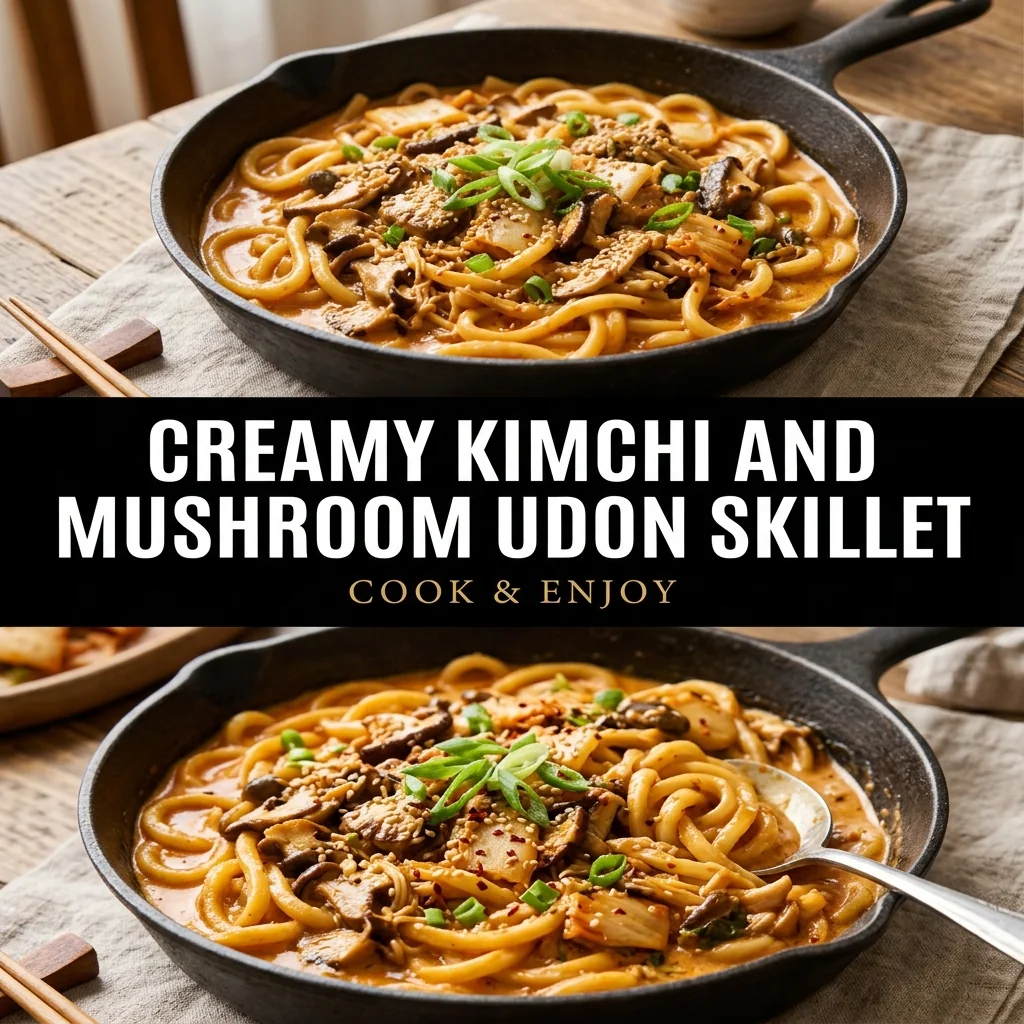
Creamy Kimchi and Mushroom Udon Skillet brings together the robust fermentation of aged Korean Napa cabbage and the velvety comfort of a rich dairy sauce. Thick, pillowy Sanuki udon noodles act as the ultimate canvas for this fusion dish, grasping a vibrant coral sauce built from spicy gochujang, savory kimchi brine, and heavy whipping cream. Earthy shiitake mushrooms offer an umami-rich textural complement to the pleasant chew of the noodles and the crisp bite of kimchi leaves. Ready in twenty minutes, this skillet dinner delivers a harmonious balance of fiery chili, bright lacto-fermented tang, and buttery softness that transforms everyday noodles into a deeply satisfying comfort meal.
Fermentation Meets Dairy
The secret to this skillet lies in balancing high acidity with rich milk fat. Fermented kimchi contains lactic acid, which imparts its signature sour bite. Sautéing the chopped cabbage in butter mellows harsh sharp notes, creating caramelized edges that blend seamlessly with dairy. Introducing heavy whipping cream tempers the assertive heat of gochujang chili paste, transforming pungent aromatics into a smooth, emulsified emulsion. Because heavy cream possesses high fat content, it resists curdling in the presence of acidic kimchi brine, producing a stable, luxurious coating that clings tightly to every noodle.
Choosing Halal Kimchi and Gochujang
Traditional kimchi and gochujang formulations warrant scrutiny for halal dining. Some commercial kimchi uses unverified fish sauces, shrimp pastes, or trace spirits during fermentation, while standard gochujang frequently incorporates alcohol as an added preservative or fermentation byproduct. Seek out explicitly halal-certified Korean condiments that omit ethanol additions and use verified seasonings. These authentic products retain genuine fermented depth, deep crimson color, and natural chili warmth while adhering strictly to halal compliance, guaranteeing an uncompromised skillet sauce that delivers full culinary authenticity.
The Importance of Sanuki Udon
Noodle geometry dictates how well a thick skillet sauce performs. Sanuki udon noodles, native to Japan's Kagawa prefecture, are square-cut, thick wheat strands celebrated for their elastic rebound. Pre-cooked frozen cakes require merely ninety seconds in boiling water to unlock their tender, chewy matrix. Overcooking causes wheat starch to absorb excessive water, yielding mushy bites that collapse under heavy sauces. Rinsing parboiled noodles briefly eliminates exterior starches, allowing the glossy gochujang-cream reduction to glaze the outer surface directly rather than gumming up the skillet.
Before you start
Always opt for frozen Sanuki udon rather than shelf-stable dry noodles. Frozen varieties are pre-cooked and flash-frozen, locking in the coveted 'koshi' texture—a distinct chewiness with elastic spring that stands up to thick sauces. When cooking the kimchi, ensure it sautés until softened before adding the cream; pan-frying deepens its acidity into a rounded, savory sweetness that incorporates smoothly into dairy without causing the cream to curdle.
THE RECIPE
Creamy Kimchi and Mushroom Udon Skillet
4 servings · 15 minutes preparation · 15 minutes cooking
Ingredients
Step-by-step instructions
- Bring 3 liters of water to a rapid boil in a wide saucepan, add 600 g frozen Sanuki udon, and boil for 2 minutes until strands separate cleanly.
- Drain the udon in a colander, rinse briefly under warm running water to remove excess surface starch, and reserve until needed.
- Heat 1 tablespoon vegetable oil and 1 tablespoon butter in a 12-inch heavy skillet over medium-high heat until shimmering.
- Add 200 g sliced shiitakes and cook for 3 to 4 minutes without moving them initially until nicely browned on both sides.
- Add 1 cup chopped kimchi and minced garlic to the skillet, sautéing over medium heat for 3 minutes until the kimchi becomes translucent and fragrant.
- Whisk 1 tablespoon alcohol-free gochujang, 3 tablespoons kimchi brine, and 1 tablespoon light soy sauce into 3/4 cup heavy cream until blended.
- Pour the cream mixture into the skillet, stirring continuously over medium heat for 2 minutes until it bubbles gently and thickens into a glossy coral sauce.
- Drop the drained udon noodles and remaining 1 tablespoon butter into the skillet, tossing gently for 2 minutes over medium-low heat until completely coated, then garnish with sliced scallions, sesame seeds, and nori strips before serving.
Kitchen notes
Always opt for frozen Sanuki udon rather than shelf-stable dry noodles. Frozen varieties are pre-cooked and flash-frozen, locking in the coveted 'koshi' texture—a distinct chewiness with elastic spring that stands up to thick sauces. When cooking the kimchi, ensure it sautés until softened before adding the cream; pan-frying deepens its acidity into a rounded, savory sweetness that incorporates smoothly into dairy without causing the cream to curdle.
Storage & make-ahead
Store leftovers in an airtight container in the refrigerator within 2 hours of cooking, keeping for up to 3 days. Reheat gently in a nonstick skillet over medium-low heat with 2 tablespoons of water or milk to loosen the cream sauce, stirring until hot and reaching an internal temperature of 165 F / 74 C. Do not freeze, as udon loses its chew.
An original recipe guide inspired by themes in our Pinterest research. Recipe has not been independently kitchen-tested. AI-generated image is illustrative; your finished dish may look different.
Frequently asked questions
Can I substitute other mushrooms for shiitake?
Yes. King oyster mushrooms, cremini, or beech mushrooms work exceptionally well. Slice them into bite-sized segments and brown thoroughly in the pan before adding the kimchi to develop adequate savory depth.
Is it possible to make this dish with milk instead of heavy cream?
Milk contains higher water and lower fat levels, making it susceptible to curdling from the acidic kimchi brine. If using whole milk, whisk in 1 teaspoon cornstarch beforehand and simmer gently to maintain emulsion stability.
How spicy is this udon dish?
The dish has a medium, warming kick. The natural fats in the heavy cream and butter significantly soften the heat of the gochujang and kimchi, highlighting their savory fruitiness rather than aggressive burn.


