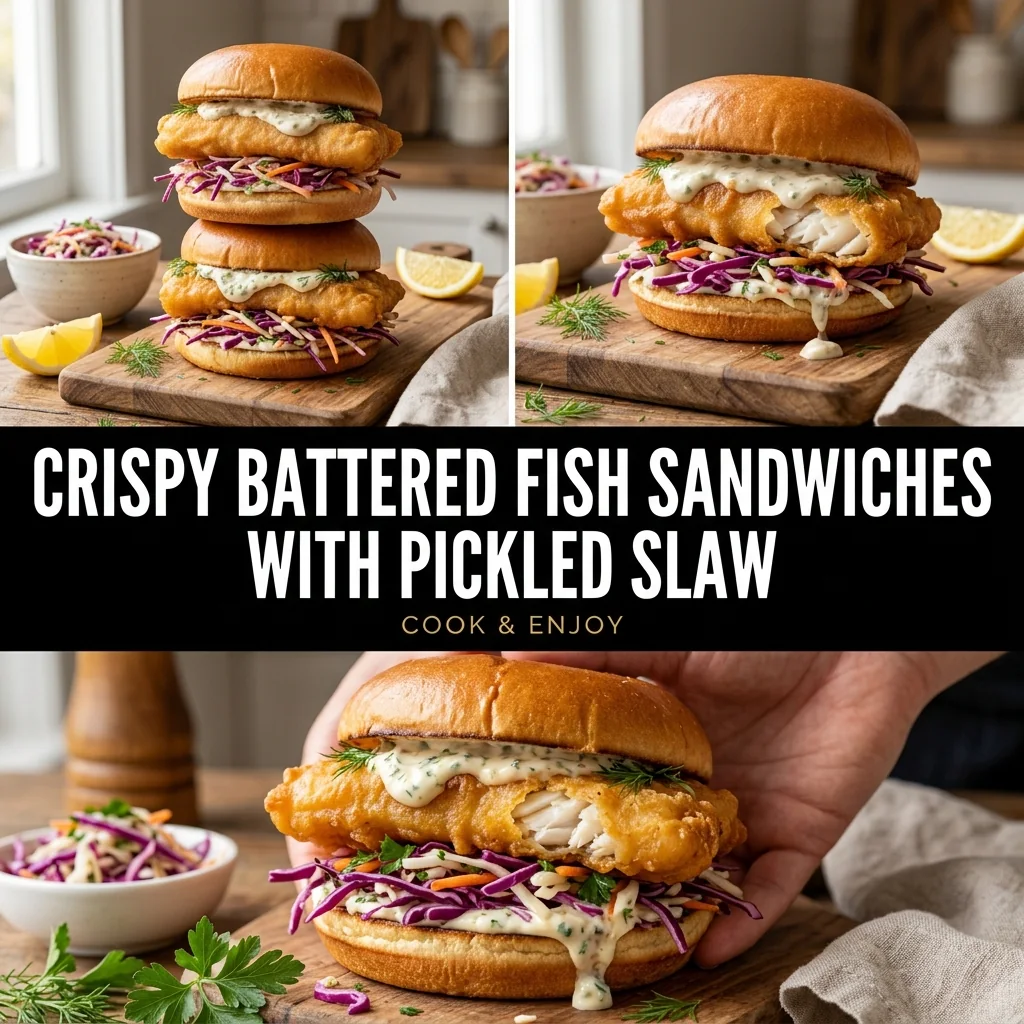
WHY MAKE IT
A little comfort, a lot of flavor.
A successful fried fish sandwich relies on the dynamic contrast between hot, shatteringly crisp batter and cool, acid-forward produce. In this recipe, tender haddock fillets receive an airy batter combining all-purpose flour with equal parts cornstarch, leavened through baking powder and ice-cold club soda. This structure ensures that moisture from the haddock cannot steam through and soften the crust during frying. Paired with a fast-pickled slaw seasoned with cider vinegar and sugar, the rich crunch of the fish is balanced by clean sharpness and gentle sweetness. Assembled on soft, lightly griddled potato buns with a base of rich mayonnaise, every element supports textural contrast while highlighting the mild, sweet profile of fresh wild-caught haddock.
Selecting and Preparing Fish Fillets
Haddock is an exceptional white fish for battering due to its firm, large flake and naturally clean, mild sweetness. When purchasing, inspect the fillets to ensure the flesh is translucent, firm, and free of discoloration. Before dredging, blot the fillets thoroughly with paper towels to strip away exterior surface moisture. Water clinging to the exterior fish tissue creates excess steam pockets during frying, which directly causes the crisp batter envelope to detach from the protein. Cut fillets to match your bun diameter for stable sandwich construction.
The Science of Crisp Cold Batter
Blending equal quantities of all-purpose flour and cornstarch dilutes the gluten concentration, creating a fragile, glass-like crunch rather than a chewy bready shell. The chilled club soda introduces millions of tiny carbon dioxide bubbles throughout the batter, creating an expansive honeycomb matrix as soon as the fish hits 375 F / 190 C oil. Avoid aggressive whisking; minimal agitation inhibits gluten development. Fry in batches to maintain proper oil heat, ensuring the fish reaches an internal temperature of 145 F / 63 C.
Assembly and Slaw Integration
The quick-pickled slaw provides necessary acidity to cut through deep-fried richness. Ensure you drain the cabbage thoroughly with tongs before placing it onto the fried fillet, as excess liquid pool will rapidly ruin the crunchy surface. Toasting the cut sides of the potato buns creates a hydrophobic barrier against moisture from the slaw and the hot fish. A thin barrier layer of creamy mayonnaise spread on the bottom bun protects the bread structure while providing an appealing savory foundation.
Before you start
For the crispiest crust, mix the batter immediately before frying and keep your club soda ice-cold. If the batter sits, the carbonation dissipates and the starches hydrate excessively, yielding a heavy crust rather than a light, honeycomb texture. Ensure the frying oil rebounds to 375 F / 190 C between batches. Draining the fried fish on a wire rack rather than paper towels prevents trapped steam from softening the underside of the batter.
THE RECIPE
Crispy Battered Fish Sandwiches with Pickled Slaw
4 servings · 25 minutes preparation · 15 minutes cooking · 15 minutes cooling, chilling or resting
Ingredients
Step-by-step instructions
- In a medium bowl, combine shredded green cabbage, shredded red cabbage, apple cider vinegar, granulated sugar, and 1/2 teaspoon of fine sea salt. Toss thoroughly, then leave to macerate and rest at room temperature for 15 minutes to soften.
- Pat haddock fillets completely dry with paper towels and season both sides evenly with 1/4 teaspoon of fine sea salt.
- In a wide mixing bowl, whisk together all-purpose flour, cornstarch, baking powder, garlic powder, smoked paprika, and the remaining 1/2 teaspoon fine sea salt.
- Pour the ice-cold club soda into the dry starch mixture, whisking gently for only 15 to 20 seconds until just combined, leaving minor lumps to keep the batter airy.
- Pour vegetable oil into a deep 10-inch heavy skillet or Dutch oven to reach a depth of 1 inch, and heat over medium-high heat until a deep-fry thermometer registers 375 F / 190 C.
- Dip each seasoned haddock fillet into the batter, turning to coat completely, and let excess batter drip back into the bowl for 3 seconds.
- Lower two fillets gently into the hot oil away from you and fry for 4 to 5 minutes, flipping once halfway through, until deeply golden, shatteringly crisp, and the internal fish temperature reaches at least 145 F / 63 C on an instant-read thermometer.
- Transfer the cooked fish to a wire rack set over a baking sheet to drain, and repeat frying with the remaining two fillets, returning the oil to 375 F / 190 C beforehand.
- Lightly toast potato bun halves in a dry skillet over medium heat for 1 to 2 minutes, spread each bun base with halal-certified mayonnaise, set a hot crispy haddock fillet on top, mound with 1/2 cup of drained pickled slaw, cap with the bun tops, and serve immediately.
Kitchen notes
For the crispiest crust, mix the batter immediately before frying and keep your club soda ice-cold. If the batter sits, the carbonation dissipates and the starches hydrate excessively, yielding a heavy crust rather than a light, honeycomb texture. Ensure the frying oil rebounds to 375 F / 190 C between batches. Draining the fried fish on a wire rack rather than paper towels prevents trapped steam from softening the underside of the batter.
Storage & make-ahead
Store leftover fried fish and slaw in separate airtight containers in the refrigerator within 2 hours. Keep for up to 2 days. To reheat, arrange fish on a wire rack over a baking sheet and bake at 400 F / 204 C for 8 to 10 minutes until heated through to an internal temperature of 165 F / 74 C.
An original recipe guide inspired by themes in our Pinterest research. Recipe has not been independently kitchen-tested. AI-generated image is illustrative; your finished dish may look different.
Frequently asked questions
Can I substitute haddock with another variety of white fish?
Yes. Cod, pollock, or hake work cleanly in this recipe. Select thick, firm fillets that hold together when dipped and fried, and confirm they reach an internal temperature of 145 F / 63 C.
Why did my batter turn soft shortly after frying?
Soft batter typically occurs if the oil dropped below 375 F / 190 C, if the fish was drained on flat paper towels rather than an elevated wire rack, or if wet slaw was placed directly against the crust.
Can I prepare the quick-pickled cabbage slaw in advance?
Yes. You can prepare the slaw up to 24 hours in advance and keep it sealed in the refrigerator. Drain the accumulated brine thoroughly before building sandwiches so the crust remains crisp.


