WHY MAKE IT
A little comfort, a lot of flavor.
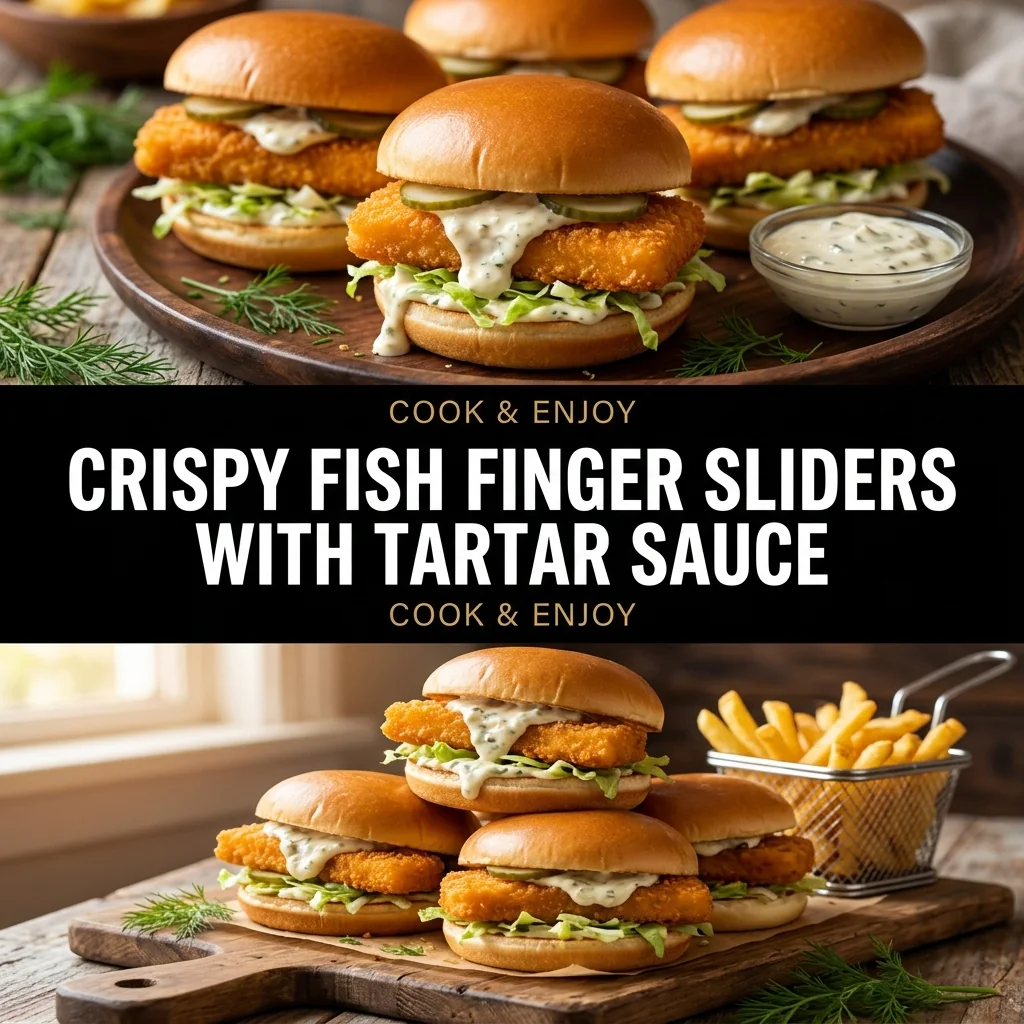
Freshly assembled seafood sliders offer an appealing contrast between brittle, crunchy crusts and tender, flaky white fish. Making fish fingers from scratch using fresh cod fillets allows for control over thickness and seasoning, ensuring every bite remains moist rather than dried out. Pairing the fried fillets with a sharp, caper-spiked homemade tartar sauce cuts through the rich brioche bun and fried breadcrumbs. This recipe delivers a practical family meal or casual gathering platter that cooks swiftly on the stovetop. Using shallow pan-frying rather than deep-frying keeps oil volume manageable while still achieving a uniform, deep-golden crust on every side.
Selecting and Cutting the Fish
Firm white fish fillets such as Pacific or Atlantic cod, haddock, or pollock work exceptionally well for sliders. When slicing the fillet, aim for uniform rectangular strips roughly 8 to 10 cm in length and 2.5 cm in width. Uniformity ensures that all portions finish cooking simultaneously in the skillet. If using fillets with tapering tail sections, fold the thinner ends under or reserve them for chowder so your slider portions maintain an even thickness and cook through cleanly to the required 145 F / 63 C without drying out.
Achieving a Crisp Panko Shell
The standard three-stage breading method produces the sturdiest barrier. Coating the fish in seasoned flour provides a dry surface for the beaten egg to grip, while the egg binds the coarse panko flakes securely. Allowing the breaded fingers to rest for 10 minutes on a wire rack before frying is an essential intermediate step. This brief pause permits the proteins in the egg wash to hydrate the flour and breadcrumb surface, drastically reducing the amount of crumb fall-off once the fish enters the hot cooking oil.
Sauce and Bun Assembly
Mini brioche slider buns provide a soft, lightly sweetened cushion that complements the savory crunch of the breading. To prevent moisture from softening the crisp exterior of the fried fish, place a clean, dry leaf of butter lettuce directly on the bottom half of the toasted bun before adding the hot fish finger. Spooning the chunky caper and pickle tartar sauce directly over the top of the fish prevents the lower bun from soaking up juices while keeping every layer balanced and easy to handle.
Before you start
Ensure the oil temperature stays near 350 F / 175 C throughout frying. If the oil is too cold, the panko coating absorbs excess fat and turns greasy before the fish cooks through. If it is too hot, the exterior darkens before the fish reaches an internal 145 F / 63 C. Fry in two batches of four fingers to prevent overloading the skillet, and use paper towels on a wire cooling rack to catch any residual oil immediately after cooking.
THE RECIPE
Crispy Fish Finger Sliders with Tartar Sauce
4 servings · 25 minutes preparation · 15 minutes cooking · 10 minutes cooling, chilling or resting
Ingredients
Step-by-step instructions
- Pat 600 g skinless cod fillets dry with paper towels and slice into 8 uniform fingers, seasoning with 1/2 teaspoon fine sea salt and 1/4 teaspoon black pepper.
- Set up a breading station using three shallow bowls: place 100 g all-purpose flour in the first; 2 beaten large eggs in the second; and 120 g panko breadcrumbs mixed with 1/2 teaspoon sweet paprika and the remaining 1/2 teaspoon fine sea salt in the third.
- Dredge each cod finger thoroughly in the flour, shaking off excess, dip completely into the beaten egg, and press firmly into the panko breadcrumbs until evenly coated.
- Transfer the breaded cod strips to a wire rack set over a tray and rest at cool room temperature for 10 minutes to help the crumb coating adhere during frying.
- Stir together 120 g mayonnaise, 2 tablespoons finely chopped dill pickles, 1 tablespoon chopped capers, 1 tablespoon fresh lemon juice, 1 tablespoon chopped fresh dill, and 1/4 teaspoon black pepper in a small bowl; cover and set aside.
- Heat 60 ml neutral cooking oil in a large 30 cm nonstick skillet over medium heat to 350 F / 175 C.
- Working in batches if necessary, add the breaded cod fingers and shallow-fry for 3 to 4 minutes per side until deeply golden brown and the internal temperature reaches at least 145 F / 63 C on an instant-read thermometer.
- Warm or lightly toast the cut sides of the 8 split brioche slider buns in a dry skillet over low heat for 1 to 2 minutes.
- Assemble each slider by placing a butter lettuce leaf on the bun base, adding a hot crispy fish finger, spooning over a generous tablespoon of the prepared tartar sauce, and finishing with the top bun.
Kitchen notes
Ensure the oil temperature stays near 350 F / 175 C throughout frying. If the oil is too cold, the panko coating absorbs excess fat and turns greasy before the fish cooks through. If it is too hot, the exterior darkens before the fish reaches an internal 145 F / 63 C. Fry in two batches of four fingers to prevent overloading the skillet, and use paper towels on a wire cooling rack to catch any residual oil immediately after cooking.
Storage & make-ahead
Promptly refrigerate leftovers within 2 hours in an airtight container for up to 2 days. Keep tartar sauce separate in a sealed jar for up to 3 days. To reheat, bake fish fingers on a wire rack over a baking sheet at 375 F / 190 C until crisp and the internal temperature registers 165 F / 74 C. Do not microwave the breaded fish.
An original recipe guide inspired by themes in our Pinterest research. Recipe has not been independently kitchen-tested. AI-generated image is illustrative; your finished dish may look different.
Frequently asked questions
Can I bake the fish fingers instead of frying them?
Yes. Arrange the breaded cod fingers on an oiled wire rack set inside a rimmed baking sheet. Mist lightly with cooking oil spray and bake at 425 F / 220 C for 12 to 14 minutes until golden and the internal fish temperature reaches at least 145 F / 63 C.
How can I keep the first batch warm while frying the second?
Place the fried fingers on a wire rack set over a baking sheet in an oven warmed to 200 F / 95 C. This keeps the exterior dry and crisp without continuing to cook the tender interior fish while you fry the remaining portions.
Can I use frozen cod for this recipe?
Yes, provided the fillets are thoroughly thawed in the refrigerator overnight. Pat the thawed fish extensively with paper towels before slicing and dredging to remove surface moisture, which could otherwise create steam pockets beneath the breading and cause the crust to loosen.


