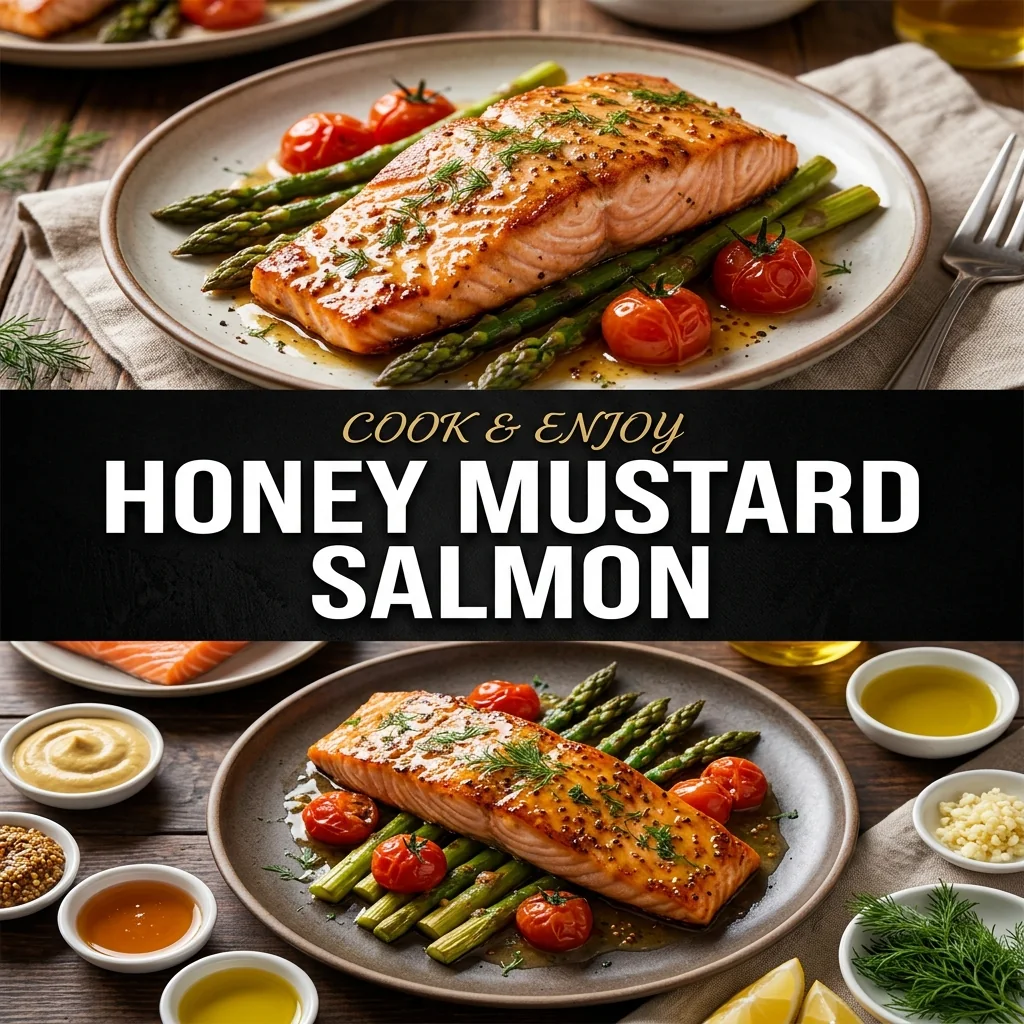
WHY MAKE IT
A little comfort, a lot of flavor.
Honey mustard glazed salmon is a weeknight classic that strikes a precise harmony between assertive sharpness and gentle sweetness. Salmon carries rich natural oils that pair exceptionally well with sharp condiments, which cut through heavy mouthfeel while accentuating the fish's natural savory quality. Whisking together smooth Dijon with coarse stone-ground mustard introduces both depth of flavor and appealing texture, while honey promotes rapid caramelization under oven heat. Fresh lemon juice and minced garlic bring aromatic brightness that keeps the sauce lively rather than cloying. Prepared on a parchment-lined sheet pan in under twenty-five minutes, this recipe delivers impressive culinary polish with minimal cleanup, making it a reliable staple for busy home cooks.
The Synergy of Two Mustards
Using a blend of smooth Dijon and textured whole grain mustard produces the best structural and flavor profile for baked seafood. Dijon contains white wine and vinegar, providing an acidic backbone that stabilizes the emulsified sauce and breaks down heavy fats on the palate. Whole grain mustard features intact mustard seeds that release mild heat and a gentle crunch when chewed. Together with honey and olive oil, they form a thick paste that clings tightly to the fish during roasting rather than running off onto the hot baking pan.
Managing Sugar and Oven Heat
Honey caramelizes at roughly 320 F (160 C), meaning high oven temperatures require careful calibration to avoid charred bitterness. Baking at 400 F (200 C) allows the salmon interior to cook through gently while the moisture in the mustard buffers the honey against burning. If you choose to finish the fish under a high broiler for deeper color, position the pan at least 6 inches away from the broiler element. Never leave the oven unattended during broiling, as honey transforms from golden to burnt in seconds.
Serving Suggestions and Pairings
The sweet and piquant glaze on this salmon complements earthy sides and green vegetables. Serve each portion over steamed jasmine rice, roasted baby potatoes, or buttered quinoa to capture any dripping mustard sauce. For vegetable accompaniments, consider roasted asparagus spears, charred broccolini, or a crisp shaved fennel salad dressed with light vinaigrette. The vegetal bitterness of dark greens like kale or sauteed spinach provides a striking counterpoint to the caramelized honey and garlic coating on the fillet.
Before you start
Do not skip combining both smooth Dijon and whole grain mustard. Dijon provides a sharp, creamy emulsion that adheres closely to the salmon flesh, while stone-ground mustard seeds introduce textural pop and rustic acidity that balances the sticky sweetness of the honey. Keep a watchful eye during any final broiling, as honey burns quickly under direct heating elements.
THE RECIPE
Honey Mustard Salmon
4 servings · 10 minutes preparation · 14 minutes cooking · 3 minutes cooling, chilling or resting
Ingredients
Step-by-step instructions
- Preheat the oven to 400 F (200 C). Line a heavy rimmed baking sheet with parchment paper or heavy-duty aluminum foil, and lightly mist the surface with nonstick olive oil cooking spray.
- Pat the salmon fillets completely dry on all sides using paper towels to remove moisture. Season both sides evenly with 1/2 teaspoon of kosher salt and 1/4 teaspoon of black pepper, then place the fillets skin-side down on the prepared baking sheet, leaving at least 2 inches between pieces.
- In a small mixing bowl, whisk together the Dijon mustard, whole grain mustard, honey, extra-virgin olive oil, grated garlic, fresh lemon juice, chopped thyme leaves, smoked paprika, and the remaining 1/4 teaspoon of kosher salt until a smooth, cohesive glaze forms.
- Using a pastry brush or spoon, generously coat the top and exposed sides of each salmon fillet with the honey mustard glaze, dividing the entire mixture evenly among the four portions.
- Transfer the baking sheet to the upper-middle rack of the preheated oven. Bake for 12 to 14 minutes until the glaze bubbles along the edges and an instant-read thermometer inserted into the thickest center of a fillet registers 145 F (63 C).
- Optional for added caramelization: Switch the oven to broil on high for the final 60 to 90 seconds, monitoring closely through the oven window to brown the glaze without scorching the honey.
- Remove the salmon from the oven and let rest on the warm baking sheet for 3 minutes to allow residual juices to settle. Garnish with chopped chives and serve immediately alongside fresh lemon wedges.
Kitchen notes
Do not skip combining both smooth Dijon and whole grain mustard. Dijon provides a sharp, creamy emulsion that adheres closely to the salmon flesh, while stone-ground mustard seeds introduce textural pop and rustic acidity that balances the sticky sweetness of the honey. Keep a watchful eye during any final broiling, as honey burns quickly under direct heating elements.
Storage & make-ahead
Store leftover glazed salmon in a shallow airtight glass container in the refrigerator for up to 3 days. To reheat without hardening the glaze, warm in a 325 F (165 C) oven loosely covered with foil for 8 to 10 minutes until warm and registering 145 F (63 C). The sweet glaze also makes cold leftovers delicious flaked over crisp greens. Refrigerate perishable leftovers within 2 hours (within 1 hour above 90°F/32°C), using shallow containers. If reheating, heat throughout to 165°F (74°C).
An original recipe guide inspired by themes in our Pinterest research. Recipe has not been independently kitchen-tested. AI-generated image is illustrative; your finished dish may look different.
Frequently asked questions
Can I replace the honey with maple syrup?
Yes, pure amber maple syrup can replace honey in equal measure. Maple syrup produces a slightly thinner glaze with woody, caramelized notes, so whisk it thoroughly with the mustards to ensure it adheres properly during the baking process.
How do I prevent the salmon skin from sticking to the pan?
Always line your rimmed baking sheet with nonstick parchment paper or foil lightly misted with oil. Patting the salmon skin completely dry before resting it on the paper also creates a clean release once the fish is baked.
Is it safe to prepare the glaze in advance?
Yes, whisk the honey, mustards, garlic, lemon juice, and seasonings together up to 48 hours in advance. Store the mixture covered in the refrigerator, and bring it to room temperature before brushing it onto the seasoned fish.


