WHY MAKE IT
A little comfort, a lot of flavor.
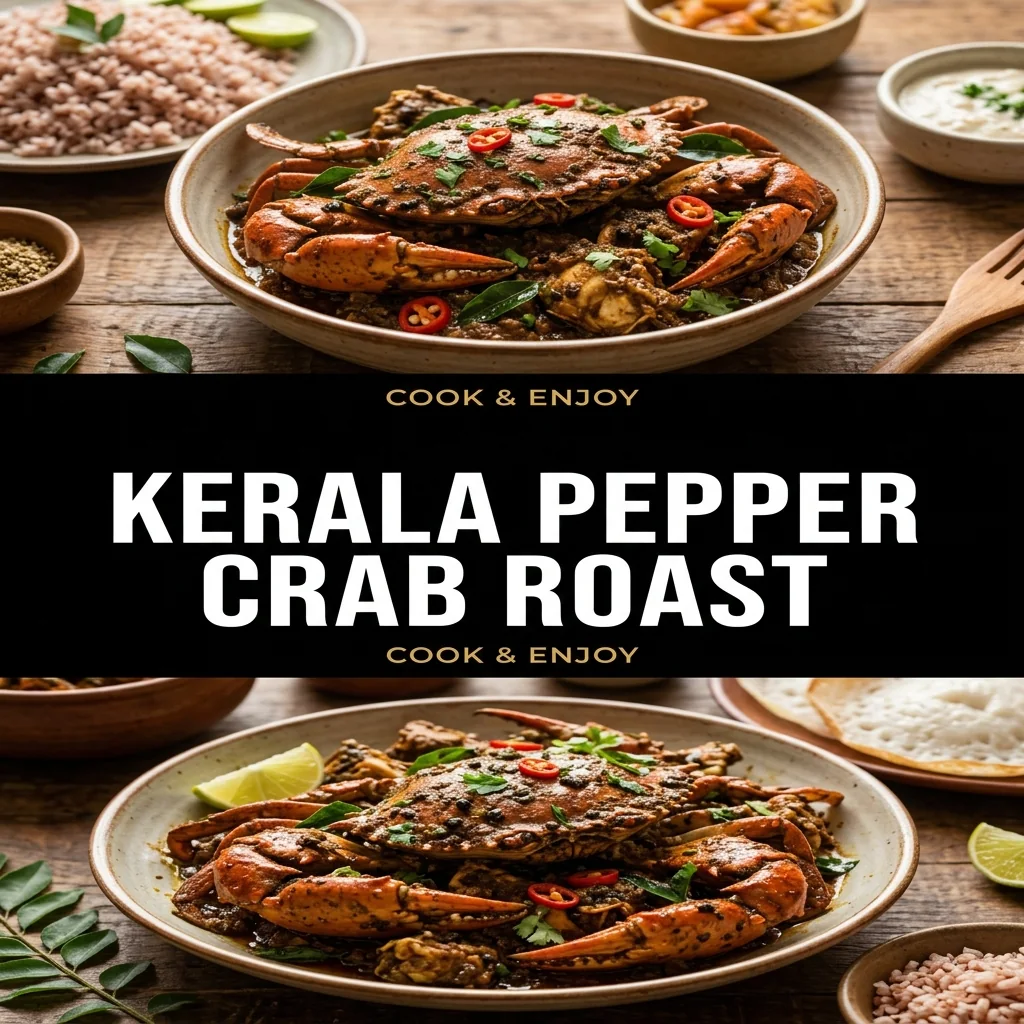
Kerala pepper crab roast, often prepared along the spice-rich Malabar and Travancore coasts of South India, is a celebrated culinary showcase of fresh seafood and bold spices. Unlike liquid curries, a traditional 'roast' or 'ularthiyathu' involves slowly reducing aromatics until they form a dense, intensely concentrated masala that tightly coats the protein. Fresh coconut oil provides a rich, nutty base for mountains of slowly browned shallots, vibrant green curry leaves, and biting crushed black pepper. The sweetness of tender crab meat pairs impeccably with the fiery warmth of the peppercorns and the subtle anise aroma of fennel. Eating this dish is a hands-on experience that rewards diners with deep, layered flavors in every bite.
The Role of Freshly Crushed Pepper
Black pepper is the undeniable crown jewel of this coastal roast. Unlike mild red chilies that impart uniform heat and color, black peppercorns offer sharp, woody pungency with citrus notes when freshly cracked. Pre-ground table pepper oxidizes quickly, leaving only flat bitterness. Using whole peppercorns cracked coarsely in a mortar creates textural flecks that adhere to the crab shells, releasing bursts of heat upon biting. The volatile compound piperine stimulates the palate, cutting cleanly through the inherent richness of the sweet crab meat and virgin coconut oil.
Caramelizing Shallots for Masala Body
The dense, dark consistency of the roast masala depends entirely on the patient caramelization of sliced shallots. Shallots contain higher sugar concentrations and lower water content than regular yellow onions, allowing them to brown evenly without releasing excessive moisture. Sautéing them slowly in coconut oil alongside fresh curry leaves creates a deeply savory, slightly sweet base that anchors the spice blend. Rushing this stage with excessive heat can burn the delicate alliums, imparting a bitter taste that overpowers the delicate crab.
Prepping and Roasting the Crab
Proper cleaning and cracking of the crabs ensures both culinary success and ease of eating. After removing the apron, spongy gills, and intestinal tract, washing the body cavity ensures a clean flavor. Cracking the dense claws allows steam and aromatic spices to penetrate the hard exterior during the covered braise. The final uncovered roasting step evaporates residual water, leaving the fragrant oil and toasted spice solids clinging tenaciously to the cracked shells. Verifying an internal meat temperature of 145°F (63°C) ensures safe consumption.
Before you start
Cracking the claws gently prior to cooking is essential; it allows the robust pepper masala to penetrate inside while preventing the steam buildup that can make shells dangerously difficult to crack at the table. Coarsely crush your black peppercorns using a mortar and pestle rather than using pre-ground powder, as freshly cracked peppercorns provide essential texture, sharp heat, and essential oils without muddying the sauce. Virgin coconut oil imparts the authentic coastal Kerala aroma that balances the pungency of the spices.
THE RECIPE
Kerala Pepper Crab Roast
4 servings · 20 minutes preparation · 25 minutes cooking · 5 minutes cooling, chilling or resting
Ingredients
Step-by-step instructions
- Clean the crabs by removing the top carapaces and gills, rinse thoroughly under cold water, crack the large claws gently using a mallet or back of a knife, and cut bodies into halves.
- Heat the virgin coconut oil in a large, heavy-bottomed pan or traditional kadai over medium heat until fragrant.
- Add the sliced shallots and one sprig of curry leaves to the hot oil, sautéing for 8 to 10 minutes until the shallots turn a deep golden brown.
- Add the ginger-garlic paste and slit green chilies to the shallots, stirring continuously for 2 minutes until the raw aroma dissipates completely.
- Add the chopped tomato to the pan and cook for 3 to 4 minutes until the pieces break down into a soft, cohesive paste.
- Stir in the ground turmeric, Kashmiri chili powder, ground coriander, ground fennel seeds, and coarsely crushed black peppercorns, roasting the spices in the oil for 1 minute.
- Add the cleaned crab pieces and fine sea salt, tossing thoroughly so the thick masala coats every crevice and shell surface.
- Pour in 0.5 cup of water, cover the pan tightly with a lid, and cook over medium-low heat for 10 minutes until the crab shells turn vibrant orange-red and the crab meat registers 145°F (63°C).
- Remove the lid, add the remaining curry leaves, and roast over medium-high heat for 3 to 4 minutes until the excess liquid evaporates and a thick, dark masala clings to the shells, finishing with a drizzle of lime juice before resting 5 minutes.
Kitchen notes
Cracking the claws gently prior to cooking is essential; it allows the robust pepper masala to penetrate inside while preventing the steam buildup that can make shells dangerously difficult to crack at the table. Coarsely crush your black peppercorns using a mortar and pestle rather than using pre-ground powder, as freshly cracked peppercorns provide essential texture, sharp heat, and essential oils without muddying the sauce. Virgin coconut oil imparts the authentic coastal Kerala aroma that balances the pungency of the spices.
Storage & make-ahead
Cool the crab roast promptly and place into a clean, airtight container within 2 hours of preparation. Store in the refrigerator for up to 2 days. To reheat, place the crabs and masala into a heavy skillet with 2 to 3 tablespoons of water, cover, and steam gently over medium heat until thoroughly hot, ensuring the internal temperature reaches 165°F (74°C).
An original recipe guide inspired by themes in our Pinterest research. Recipe has not been independently kitchen-tested. AI-generated image is illustrative; your finished dish may look different.
Frequently asked questions
What type of crab is best for this roast?
Blue swimmer crabs or mud crabs are traditional and ideal due to their sweet, firm meat. You can also use stone crab claws, Dungeness crab clusters, or blue crabs, adjusting cooking time slightly depending on the thickness of the shells.
Can I substitute regular onions for shallots?
While small shallots or Indian sambar onions offer the most authentic sweetness and texture, finely chopped red onions can be substituted in an equal quantity if shallots are unavailable. Cook them slowly to achieve equivalent caramelization.
How spicy is this dish?
This recipe carries significant heat due to 1.5 tablespoons of crushed black pepper and green chilies. You can moderate the spice level by reducing the crushed black pepper to 1 tablespoon and discarding the seeds of the green chilies before sautéing.


