WHY MAKE IT
A little comfort, a lot of flavor.
Maple soy glazed salmon combines sweet, rich maple syrup with umami-laden fermented soy sauce, producing a balanced lacquer that complements the robust natural oils of fresh salmon. The high fat content of salmon makes it resilient during roasting, while the concentrated sauce caramelizes under high heat to form a glossy, savory-sweet crust. Ginger and garlic introduce sharp aromatic notes that cut through the richness of both the fish and syrup, preventing the dish from tasting overly sugary. Because the salmon roasts in roughly twelve minutes, this recipe delivers an elegant centerpiece suitable for dinner parties while remaining practical for standard weeknight cooking routines.
Salmon Selection and Preparation
Center-cut fillets from Atlantic, King, or Coho salmon offer uniform thickness, guaranteeing even heat penetration during high-temperature roasting. Skin-on fillets are preferable because the skin acts as an insulating barrier against direct metal contact, preserving internal moisture. Inspect fillets thoroughly and remove any pin bones with culinary tweezers before cooking. Thoroughly drying the salmon with paper towels before brushing on the reduced marinade allows the glaze to adhere smoothly instead of slipping off wet, unrendered surface oils.
The Chemistry of the Glaze
Simmering maple syrup with reduced-sodium soy sauce evaporates excess water, transforming the liquids into an unctuous basting syrup. Using reduced-sodium soy sauce is essential; conventional soy sauce concentrates too intensely during reduction, creating an overly salty finish. Pure grade A amber or dark maple syrup provides complex woodsy notes far superior to artificial pancake syrups made from corn syrup. The modest addition of rice vinegar introduces necessary acidity to balance the glaze's sticky sweetness and deep soy savor.
Achieving the Ideal Cook
Overcooking salmon leads to dry, chalky meat with unsightly white albumin proteins pushed to the exterior surface. Roasting at 400 F (204 C) keeps the cook time brief, while a short 60- to 90-second broil at the conclusion caramelizes the glaze without scorching. The fish is done when it flakes along muscle striations with light fork pressure and an instant-read thermometer inserted into the thickest center registers 145 F (63 C). Allow the fillets to rest for two minutes prior to serving.
Before you start
When reducing the maple glaze, keep the heat at medium-low once simmering starts. The natural sugars in pure maple syrup can scorch quickly if left unattended. Always divide the glaze before basting: keep one clean portion aside for the final post-roast gloss and table serving, while applying the remainder to raw fish to prevent cross-contamination. Use center-cut fillets of equal thickness so all portions cook evenly.
THE RECIPE
Maple Soy Glazed Salmon
4 servings · 15 minutes preparation · 16 minutes cooking · 15 minutes cooling, chilling or resting
Ingredients
Step-by-step instructions
- In a small nonstick saucepan, combine the pure maple syrup, reduced-sodium soy sauce, toasted sesame oil, rice vinegar, grated garlic, grated ginger root, and black pepper over medium heat.
- Bring the sauce mixture to a gentle boil, stirring frequently, then reduce the heat to medium-low and simmer uncovered for 4 to 5 minutes until the liquid reduces by roughly one-third into a lightly syrupy glaze that coats the back of a spoon. Remove from heat and allow to cool for 5 minutes.
- Pat the four salmon fillets completely dry with paper towels. Place them skin-side down inside a shallow glass baking dish. Pour half of the cooled maple-soy glaze over the flesh, brush to coat evenly, and allow the salmon to rest on the counter at cool room temperature for 10 minutes (total marinating rest is 15 minutes including cooling interval).
- Preheat your oven to 400 F (204 C). Line a heavy rimmed 13x9-inch baking sheet with heavy-duty aluminum foil, lightly misting the surface with cooking spray.
- Transfer the marinated salmon fillets onto the prepared baking sheet, spacing them at least 2 inches apart to allow hot air to circulate freely around each piece. Discard the raw marinade left in the shallow dish.
- Roast the salmon uncovered in the center rack of the oven for 9 to 11 minutes. Carefully brush the tops of the fillets with 1 to 2 tablespoons of the reserved clean glaze from the saucepan.
- Switch the oven to broil on high for the final 1 to 2 minutes of cooking, watching closely to avoid burning, until the glaze bubbles, darkens slightly at the edges, and the thickest portion of the salmon reaches an internal temperature of 145 F (63 C). Garnish with sliced green onions and toasted sesame seeds before serving.
Kitchen notes
When reducing the maple glaze, keep the heat at medium-low once simmering starts. The natural sugars in pure maple syrup can scorch quickly if left unattended. Always divide the glaze before basting: keep one clean portion aside for the final post-roast gloss and table serving, while applying the remainder to raw fish to prevent cross-contamination. Use center-cut fillets of equal thickness so all portions cook evenly.
Storage & make-ahead
Transfer leftover cooked salmon into an airtight container within 2 hours of roasting and store in the refrigerator at 40 F (4 C) or below for up to 3 days. To reheat without drying out the delicate fats, place fillets in a covered baking dish with 1 tablespoon of water at 300 F (149 C) until warmed through to 165 F (74 C). Alternatively, enjoy cold over greens.
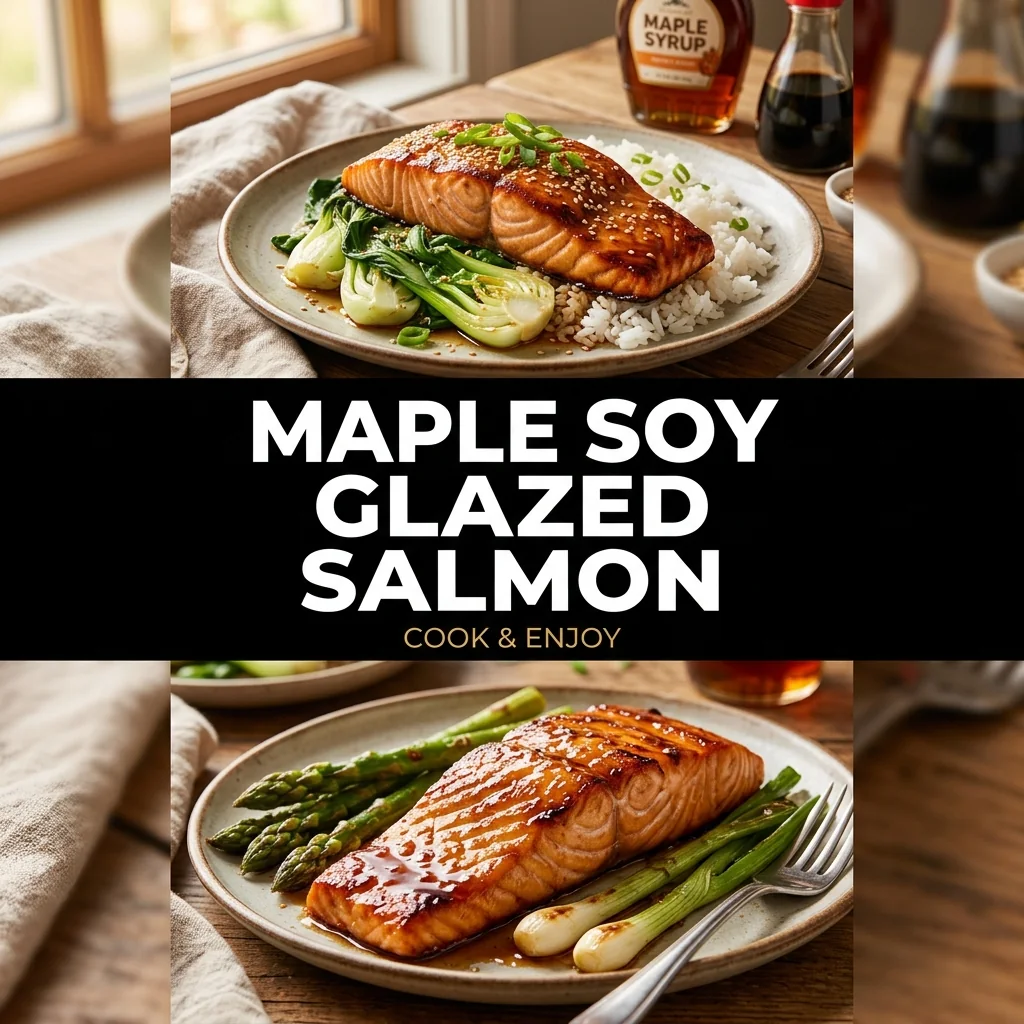
An original recipe guide inspired by themes in our Pinterest research. Recipe has not been independently kitchen-tested. AI-generated image is illustrative; your finished dish may look different.
Frequently asked questions
Can I use honey instead of maple syrup?
Yes, substitute honey in equal volume. Either glaze can scorch under the broiler, so watch it closely and remove the salmon once it reaches 145 F (63 C).
How do I prevent the salmon skin from sticking to the baking pan?
Use a foil-lined rimmed baking sheet brushed with neutral oil, since this recipe finishes under the broiler. Lift the cooked fillets gently with a thin fish spatula. Do not use parchment beneath the broiler.
What sides pair well with maple soy salmon?
Steamed jasmine or brown rice balances the savory sauce beautifully. Pair with roasted baby bok choy, steamed broccoli florets, or a crisp snap pea salad dressed with sesame vinaigrette to complement the rich, glossy glaze.


