WHY MAKE IT
A little comfort, a lot of flavor.
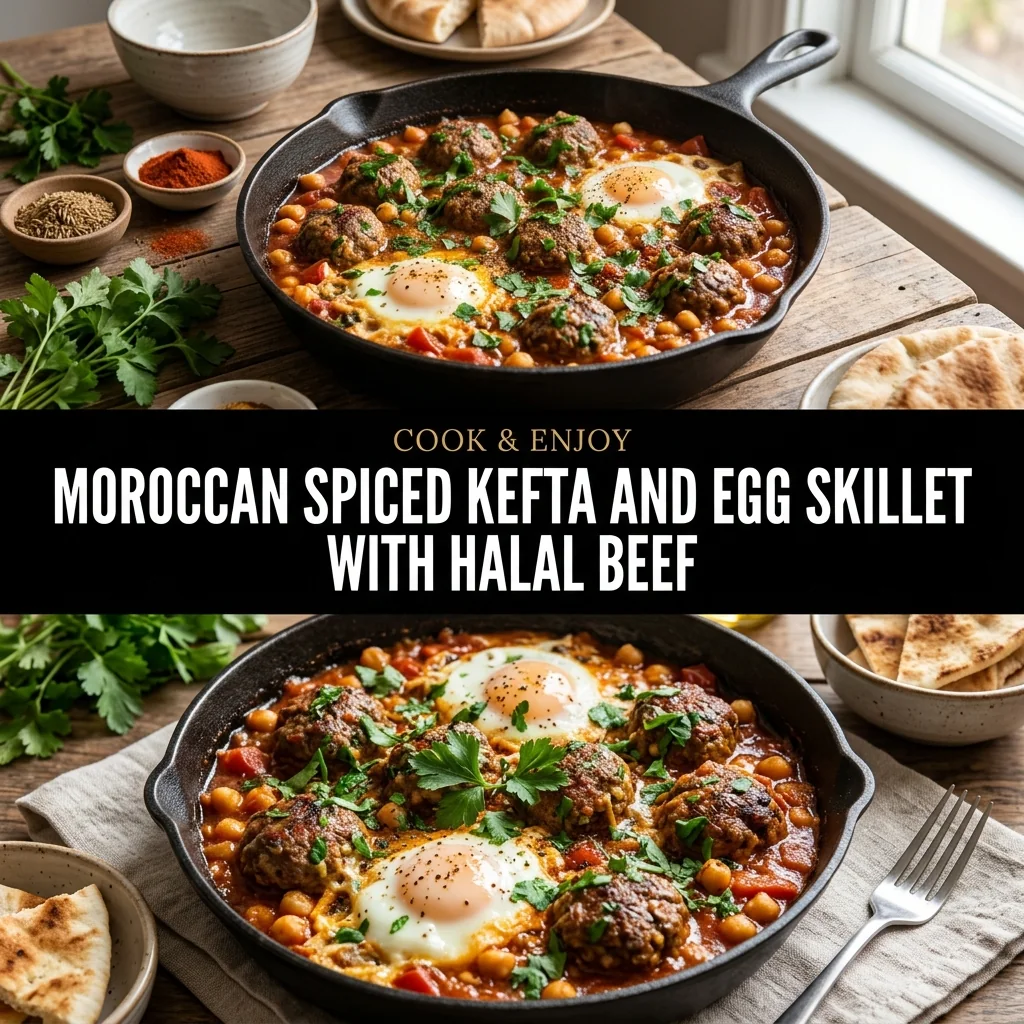
Moroccan spiced kefta and egg skillet brings North African market flavors straight to the morning table. Miniature halal ground beef meatballs, known as kefta, are seasoned with sweet paprika, toasted cumin, fresh flat-leaf parsley, and earthy coriander before being seared to develop deep caramelization. The pan drippings then form the savory foundation of a rustic crushed tomato sauce infused with garlic and fragrant warm spices. Whole eggs are nestled directly into simmering pockets of sauce alongside the tender beef, gently poaching until the whites are fully set while the rich yolks remain silken. Paired with warm crusty bread, this one-skillet breakfast provides robust protein and vibrant flavor.
Crafting Tender Halal Kefta
Choosing halal ground beef with roughly fifteen percent fat content yields the juiciest kefta meatballs without rendering excess grease into the sauce. Handle the meat gently when combining the spices, grated onion, and chopped fresh herbs; overworking ground meat results in dense, rubbery meatballs rather than tender morsels. Shaping them into small, bite-sized rounds ensures they cook through rapidly and evenly alongside the eggs. Searing the meatballs first creates flavorful fond on the skillet base, which dissolves into the tomato sauce to enrich the overall flavor profile of the breakfast dish.
Developing the Spiced Tomato Base
The sauce relies on good-quality canned crushed tomatoes simmered with garlic, cumin, and paprika to build a balanced, savory matrix. Cooking the sauce uncovered for five minutes prior to introducing the eggs concentrates the natural sugars and reduces excess liquid. This prevents the cracked eggs from dispersing watery pools across the pan. Scraping up the browned bits from the meatball sear introduces savory depth to the tomato base. A pinch of salt balances the natural acidity of the tomatoes, creating an inviting broth that complements the seasoned beef.
Mastering Egg Doneness in a Skillet
Poaching eggs directly in simmering sauce requires careful heat management. Once the kefta meatballs are nestled back into the skillet, use the back of a large spoon to depress four distinct wells reaching close to the pan base. Crack each egg directly into a well, cover with a tight-fitting lid, and lower the heat to maintain a gentle simmer. Cooking covered traps steam, cooking the egg whites evenly from above while protecting the yolks. The whites should reach an opaque, safe doneness of 160 F (71 C) while leaving the yolks soft.
Before you start
Grate the onion finely and squeeze out excess moisture before combining it with the ground beef. Excess water in raw onions weakens meatball binding and can cause the kefta to break apart in the sauce. When browning the meatballs, avoid overcrowding the pan; searing them over steady medium heat seals the outer crust, locking in juices and providing structural integrity before they finish simmering gently in the acidic tomato base.
THE RECIPE
Moroccan Spiced Kefta and Egg Skillet with Halal Beef
4 servings · 15 minutes preparation · 25 minutes cooking · 5 minutes cooling, chilling or resting
Ingredients
Step-by-step instructions
- Grate 1 small yellow onion onto paper towels, press out excess liquid, and place the pulp into a medium mixing bowl.
- Add 1 pound halal ground beef, 2 tablespoons chopped parsley, 2 tablespoons chopped cilantro, 1 teaspoon cumin, 1 teaspoon paprika, 1/2 teaspoon ground coriander, 1/2 teaspoon salt, and 1/4 teaspoon black pepper to the bowl.
- Mix gently with clean hands until just combined, then form the seasoned meat into 16 uniform miniature meatballs, about 1 inch in diameter.
- Heat 2 tablespoons olive oil in a 10-inch heavy skillet or cast-iron pan over medium heat until shimmering.
- Add the kefta meatballs to the skillet and sear for 4 to 5 minutes, turning occasionally until browned on all sides, then remove to a plate.
- Add 3 cloves minced garlic to the residual pan oil and saute for 1 minute until fragrant without browning.
- Pour in 14.5 ounces crushed tomatoes, remaining 1/2 teaspoon cumin, remaining 1/2 teaspoon paprika, and remaining 1/4 teaspoon salt, stirring to deglaze the skillet.
- Simmer the sauce on medium-low for 5 minutes, return the browned kefta to the sauce, and continue simmering until their centers reach 160 F (71 C), about 5 more minutes. Create four wells among the meatballs.
- Crack 1 pasteurized egg into each well, cover the pan tightly, and cook over low heat until the whites are set. For ordinary unpasteurized eggs, continue until both whites and yolks are firm.
- Remove from heat, let rest covered for 2 minutes, then garnish with the remaining fresh parsley and cilantro before serving immediately.
Kitchen notes
Grate the onion finely and squeeze out excess moisture before combining it with the ground beef. Excess water in raw onions weakens meatball binding and can cause the kefta to break apart in the sauce. When browning the meatballs, avoid overcrowding the pan; searing them over steady medium heat seals the outer crust, locking in juices and providing structural integrity before they finish simmering gently in the acidic tomato base.
Storage & make-ahead
Promptly transfer leftover kefta and sauce to an airtight container and refrigerate within 2 hours of preparation for up to 3 days. While fully cooked eggs can be stored, their yolks will firm completely upon cooling. When reheating, place the kefta and sauce into a skillet over medium-low heat, add a splash of water, and warm until bubbling and thoroughly heated through to an internal temperature of 165 F (74 C).
An original recipe guide inspired by themes in our Pinterest research. Recipe has not been independently kitchen-tested. AI-generated image is illustrative; your finished dish may look different.
Frequently asked questions
Can I substitute halal ground lamb for the beef?
Yes, halal ground lamb works wonderfully in this recipe and provides traditional Moroccan flavor. Follow the same seasoning and cooking steps, draining off any excess rendered fat after the initial searing step before adding the garlic and crushed tomatoes.
How do I know when the eggs are safely cooked?
The egg whites must be completely opaque and set firmly to the touch, reaching an internal food-safe temperature of 160 F (71 C). If you prefer firm yolks rather than runny ones, extend the covered cooking time by an additional 2 to 3 minutes.
What should I serve alongside this skillet?
Warm crusty halal bread, such as Moroccan khobz, sourdough batard, or freshly toasted flatbreads, pairs best with this dish. The bread serves as an edible utensil to dip into the spiced tomato sauce and rich egg yolks alongside the tender kefta.