WHY MAKE IT
A little comfort, a lot of flavor.
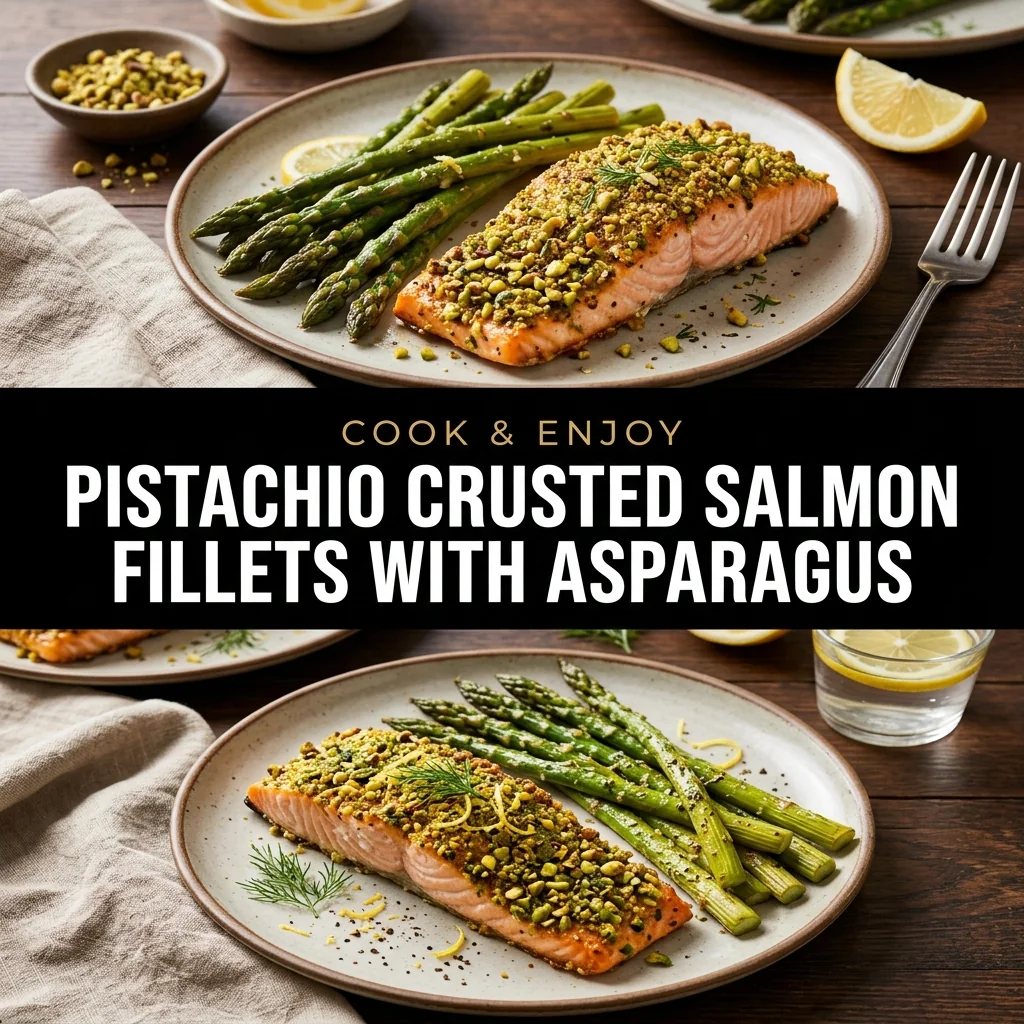
This sheet pan dinner pairs rich, tender salmon fillets with crisp-tender green asparagus and a fragrant, crunchy nut crust. Fresh salmon provides a flavorful, buttery foundation that stands up remarkably well to pungent Dijon mustard, balanced lightly with floral honey and bright lemon juice. Crushed salted pistachios form an emerald crust that toasts gently in the oven, sealing in juices while offering textural contrast in every bite. Because the entire meal cooks on a single standard half-sheet pan, preparation is straightforward and cleanup remains minimal. This balanced recipe delivers restaurant-caliber seafood with everyday ease, ensuring the fish cooks gently to safety while the fresh asparagus retains its snap.
Selecting Salmon and Asparagus
Choose center-cut salmon fillets of uniform thickness so they cook evenly throughout the baking time. Skin-on fish is preferable here, as the skin protects the delicate underside from drying out on the hot metal baking sheet. For the vegetable, select medium-thick asparagus stalks rather than pencil-thin spears. Slender spears cook too quickly and turn limp before the salmon reaches its target internal temperature. Snapping off the woody bottoms by bending each spear near the base ensures only the tender, sweet portions of the stalk reach the pan.
Binding the Nut Crust
The Dijon mustard and honey glaze performs double duty in this recipe, acting as a savory seasoning layer and an adhesive binder for the chopped pistachios. Emulsifying the mustard with a touch of extra-virgin olive oil and fresh lemon juice prevents it from scorching in the 400°F (200°C) oven. Pressing the chopped nuts into the glaze with gentle palm pressure ensures the crust remains intact during roasting and slicing. Avoid using raw pistachios, as pre-roasted nuts offer deeper roasted flavor and better structural crunch.
Baking Precision and Doneness
Achieving tender, flaky fish requires monitoring internal temperature rather than relying strictly on visual cues. Insert a calibrated digital food thermometer horizontally into the center of the thickest fillet, verifying it reads exactly 145°F (63°C). Overcooking salmon dries out the natural oils and causes white albumin proteins to seep out aggressively. A brief 5-minute rest on the counter allows muscle fibers to relax and redistribute juices throughout the flesh, yielding exceptionally succulent flakes that contrast with the crunchy nut topping.
Before you start
Chop the roasted pistachios with a large chef's knife rather than a food processor to prevent them from turning into paste. Uneven, gravel-sized bits provide the best textural crunch. Always pat the salmon completely dry with paper towels before applying the mustard wash. If the nuts begin to brown excessively before the salmon hits 145°F (63°C), drape a sheet of aluminum foil loosely over the pan for the final 3 minutes.
THE RECIPE
Pistachio Crusted Salmon Fillets with Asparagus
4 servings · 15 minutes preparation · 15 minutes cooking · 5 minutes cooling, chilling or resting
Ingredients
Step-by-step instructions
- Preheat the oven to 400°F (200°C) and line an 18x13-inch rimmed sheet pan with unbleached parchment paper.
- Pat the 4 salmon fillets thoroughly dry on both sides with paper towels and arrange them skin-side down on one half of the prepared sheet pan.
- Toss 1 lb of trimmed asparagus on the other half of the sheet pan with 1 tbsp of olive oil, 2 minced garlic cloves, 1/4 tsp of kosher salt, and 1/8 tsp of black pepper, spreading them into a single, even layer.
- Whisk together 2 tbsp of Dijon mustard, 1 tbsp of pure honey, 1 tbsp of olive oil, and 1 tbsp of lemon juice in a small glass bowl until completely emulsified.
- Season the salmon flesh evenly with the remaining 1/4 tsp of kosher salt and 1/8 tsp of black pepper, then spread the mustard-honey mixture evenly across the top of each fillet.
- Press the 2/3 cup of finely chopped pistachios firmly into the mustard glaze on each fillet to form an even, adhering crust.
- Roast on the middle oven rack for 13 to 15 minutes, until the asparagus is crisp-tender and an instant-read thermometer inserted into the thickest part of the salmon registers 145°F (63°C).
- Remove the sheet pan from the oven and allow the salmon to rest undisturbed for 5 minutes before transferring the fillets and asparagus to warm plates.
Kitchen notes
Chop the roasted pistachios with a large chef's knife rather than a food processor to prevent them from turning into paste. Uneven, gravel-sized bits provide the best textural crunch. Always pat the salmon completely dry with paper towels before applying the mustard wash. If the nuts begin to brown excessively before the salmon hits 145°F (63°C), drape a sheet of aluminum foil loosely over the pan for the final 3 minutes.
Storage & make-ahead
Cool leftovers to room temperature and refrigerate in an airtight glass container within 2 hours of roasting. Store in the refrigerator for up to 2 days. To reheat, place on a baking sheet at 325°F (165°C) until an internal temperature of 165°F (74°C) is reached. Microwave reheating will make the pistachio crust soggy.
An original recipe guide inspired by themes in our Pinterest research. Recipe has not been independently kitchen-tested. AI-generated image is illustrative; your finished dish may look different.
Frequently asked questions
Can I use frozen salmon fillets for this recipe?
Yes, provided they are completely thawed in the refrigerator overnight and thoroughly dried with paper towels before seasoning. Excess surface moisture prevents the mustard mixture from sticking and can cause the nuts to steam rather than toast.
What can I substitute for the pistachios if needed?
Finely chopped roasted almonds or shelled walnuts make dependable alternatives. Ensure whichever nut you select is pre-roasted and unsweetened, then chop them to a coarse, gravel-like consistency to mirror the desired textural crunch.
How do I prevent the asparagus from turning mushy?
Ensure the asparagus spears are spread into a single layer without overlapping on the baking sheet. Overcrowding traps steam, softening the stalks. Using medium-thick stalks ensures they cook to a crisp-tender state in the 13 to 15-minute roasting window.


