WHY MAKE IT
A little comfort, a lot of flavor.
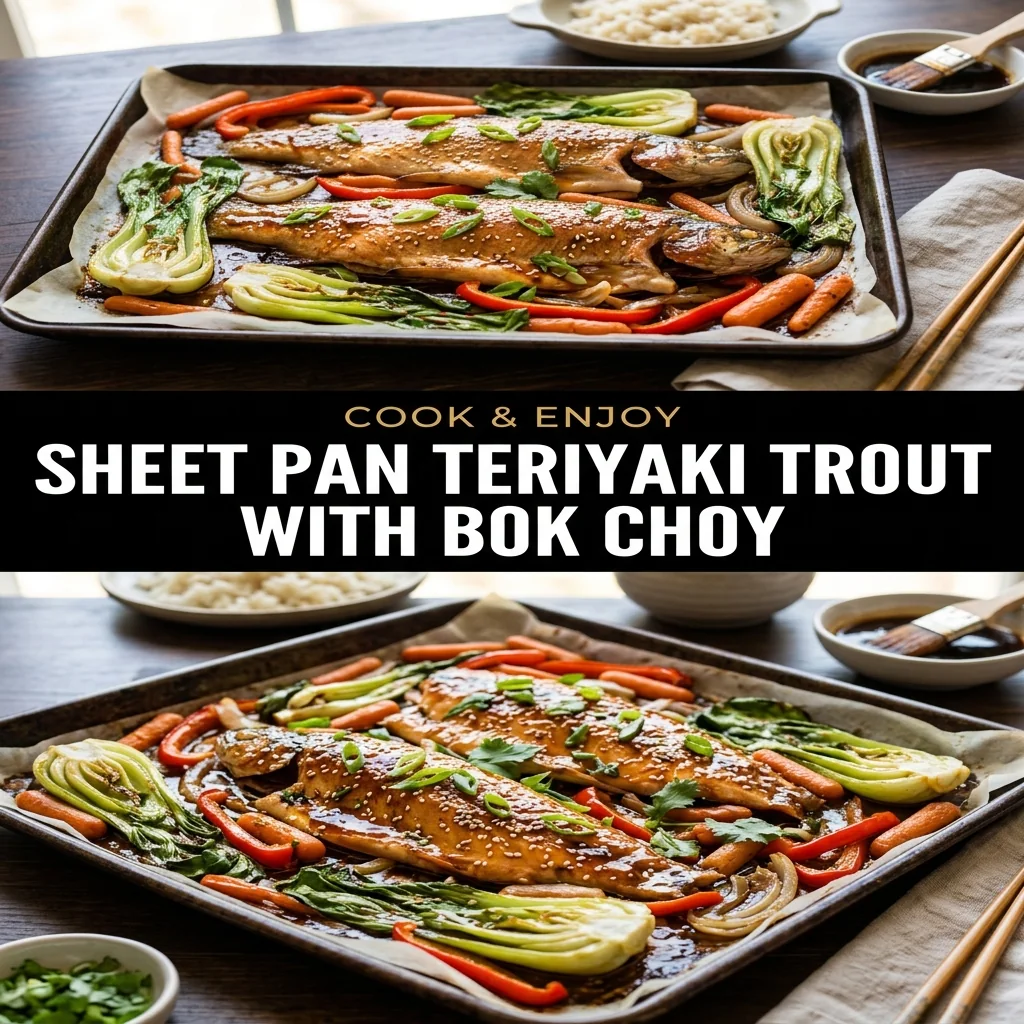
Sheet pan dinners provide an uncomplicated pathway to balanced eating, bringing together fresh seafood and tender greens on a single roasting tray. Steelhead trout resembles salmon in its ruby-orange hue and rich, unctuous mouthfeel, yet offers an exceptionally mild, clean finish that pairs wonderfully with sweet, savory sauces. Traditional Japanese teriyaki preparations rely heavily on mirin and cooking sake; this recipe replaces those with a vibrant halal reduction of certified soy sauce, pure honey, brown sugar, and alcohol-free rice vinegar. Searing the trout and crisp baby bok choy under steady oven heat caramelizes the edges of the glaze, giving home cooks an effortless, satisfying meal ready in under thirty minutes.
Formulating a Halal Teriyaki Glaze
Authentic teriyaki glaze traditionally derives its gloss and gentle acidity from sweet mirin and Japanese cooking sake, both of which contain natural alcohol. To maintain rigorous halal compliance without sacrificing depth, this house-crafted glaze balances certified naturally brewed soy sauce with pure honey, dark brown sugar, and alcohol-free rice vinegar. Freshly grated ginger and garlic add fragrant bite, while a simple cornstarch slurry provides the signature thick, lustrous sheen that adheres clingingly to the roasting trout fillets instead of pooling uselessly on the baking tray.
Handling Steelhead Trout Safely
Steelhead trout features delicate intramuscular fat that renders it tender and forgiving during high-heat roasting. Keeping the skin on during baking acts as a thermal barrier between the hot metal sheet pan and the fragile fish flesh. Ensure the skin is thoroughly scaled, dried, and lightly oiled so it releases cleanly from the parchment paper after cooking. Monitoring doneness with a digital probe thermometer ensures the trout reaches exactly 145°F (63°C), preserving its succulent pink interior without weeping white albumin proteins across the surface.
Roasting Bok Choy to Perfection
Baby bok choy provides a crisp, peppery contrast to rich glazed trout. Because greens cook at a different rate than fish, spatial positioning on the sheet pan matters. Placing the bok choy cut-side down around the outer perimeter exposes the flat leaves to direct metal heat, creating tender-crisp edges while the fleshy cores cook through gently. Halving them through the stem holds the leaves together in attractive clusters. Drying them thoroughly after washing prevents steam accumulation, ensuring the vegetable roasts cleanly without saturating the adjacent fish fillets.
Before you start
Baby bok choy retains soil deep between its outer leaf ribs. Cut each head lengthwise through the core and submerge in cold water, swishing gently to dislodge grit, then dry thoroughly before roasting. Wet greens will steam rather than caramelize on your sheet pan. Always keep a portion of your cooked teriyaki glaze separate before brushing raw fish, providing a pristine, food-safe sauce to drizzle over the cooked trout right before dining.
THE RECIPE
Sheet Pan Teriyaki Trout with Bok Choy
4 servings · 15 minutes preparation · 14 minutes cooking · 3 minutes cooling, chilling or resting
Ingredients
Step-by-step instructions
- Preheat your oven to 400°F (200°C) and line an 18x13-inch rimmed sheet pan with parchment paper.
- In a small saucepan, combine 1/3 cup halal-certified soy sauce, 1/4 cup water, 3 tablespoons brown sugar, 1 tablespoon honey, 1 tablespoon alcohol-free rice vinegar, grated garlic, and grated ginger.
- Bring the sauce to a gentle simmer over medium heat for 3 minutes, then whisk in the cornstarch slurry (1 teaspoon cornstarch dissolved in 1 tablespoon water) and cook for 1 minute until glossy and thickened into a glaze; remove from heat and set aside 3 tablespoons of glaze for serving.
- Toss the halved baby bok choy in a large bowl with 1 tablespoon toasted sesame oil and arrange them cut-side down around the outer edges of the prepared baking sheet.
- Pat 4 steelhead trout fillets completely dry, brush the skin side with remaining 1/2 tablespoon sesame oil, and position them skin-side down in the center of the sheet pan.
- Brush the top and sides of each trout fillet generously with half of the remaining warm teriyaki glaze from the saucepan.
- Roast in the preheated oven for 8 minutes, then remove the pan and brush the fillets with another layer of glaze.
- Return the sheet pan to the oven and roast for an additional 4 to 6 minutes until the bok choy stems are tender-crisp and the thickest part of the trout registers an internal temperature of 145°F (63°C).
- Rest the pan for 3 minutes, drizzle the fish with reserved clean glaze, garnish with 1 tablespoon toasted sesame seeds and sliced scallions, and serve immediately.
Kitchen notes
Baby bok choy retains soil deep between its outer leaf ribs. Cut each head lengthwise through the core and submerge in cold water, swishing gently to dislodge grit, then dry thoroughly before roasting. Wet greens will steam rather than caramelize on your sheet pan. Always keep a portion of your cooked teriyaki glaze separate before brushing raw fish, providing a pristine, food-safe sauce to drizzle over the cooked trout right before dining.
Storage & make-ahead
Store cooled trout and bok choy in an airtight glass container in the refrigerator within 2 hours. Keep refrigerated for up to 2 days. Reheat on a parchment-lined sheet pan at 325°F (165°C) for 8 to 10 minutes until the internal temperature reaches 165°F (74°C). Avoid microwaving, which destroys the delicate moisture of trout and renders the bok choy limp.
An original recipe guide inspired by themes in our Pinterest research. Recipe has not been independently kitchen-tested. AI-generated image is illustrative; your finished dish may look different.
Frequently asked questions
Can I substitute Atlantic salmon for the steelhead trout?
Yes. Atlantic or coho salmon fillets have a similar fat content and profile. Use fillets of identical thickness and follow the exact same cooking temperatures, roasting until the internal temperature registers 145°F (63°C).
Is all rice vinegar alcohol-free?
Most standard distilled rice vinegars are non-alcoholic acid solutions, but some commercial varieties contain added sake or cooking alcohol. Check the ingredient label to ensure only rice and water are listed, or choose certified halal rice vinegar.
Why did my teriyaki glaze run off the fish?
The glaze must be simmered with the cornstarch slurry until visibly thickened before brushing. Additionally, pat the trout completely dry with paper towels; surface moisture prevents the sweet glaze from clinging to the flesh.


