WHY MAKE IT
A little comfort, a lot of flavor.
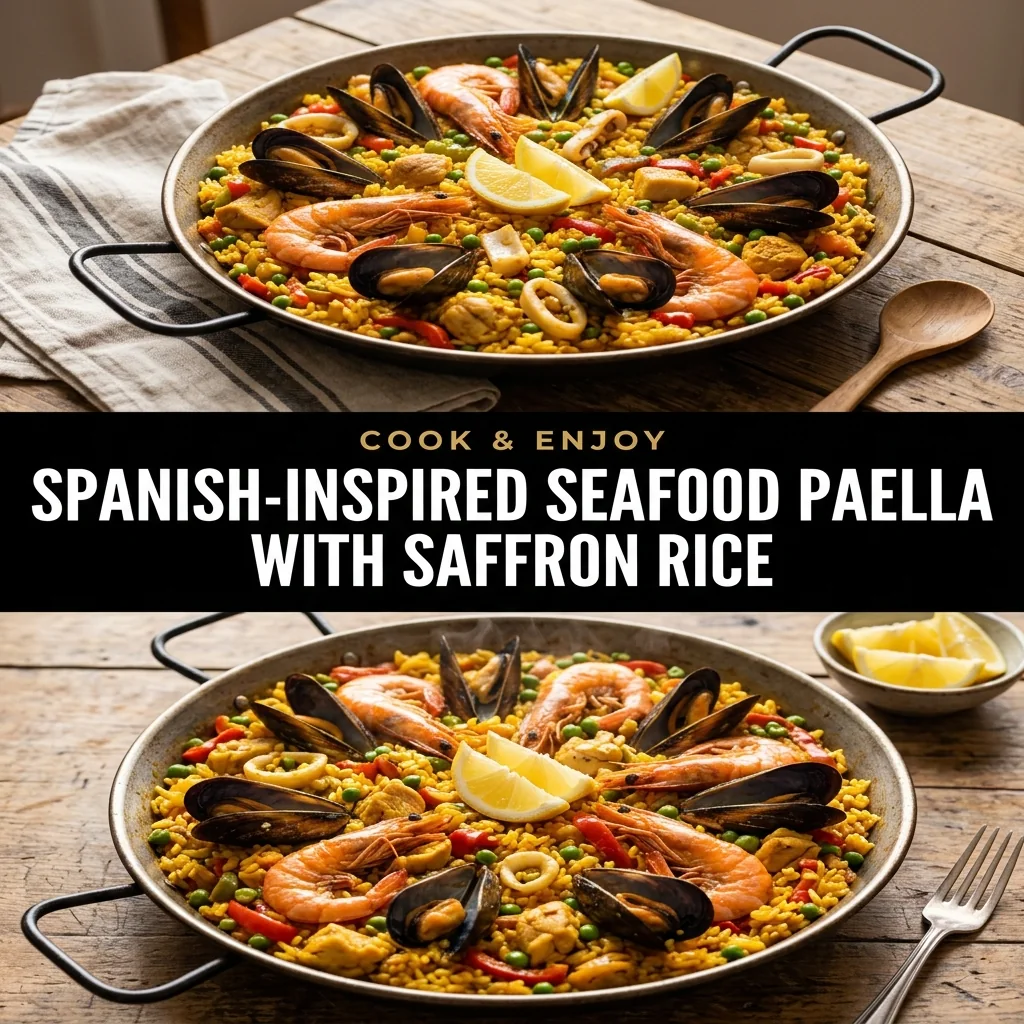
This Spanish-inspired stovetop paella captures the depth and warmth of Mediterranean coastal cooking through aromatic seafood and fragrant spices. Short-grain bomba rice serves as the structural centerpiece, engineered by nature to absorb three times its volume in liquid while remaining firm and distinct. The flavor profile builds from a rich sofrito of slowly simmered tomatoes, sweet peppers, garlic, and pimentón, elevated by precious strands of steeped saffron. Plump wild-caught shrimp, tender squid rings, and briny fresh mussels steam directly over the simmering grains, releasing their natural savory juices down into the pan. Resting after cooking lets the starch settle, ensuring every spoonful is loaded with savory stock and balanced aromatics.
Selecting and Preparing Rice
Bomba rice is the gold standard for paella because its unique starch structure allows it to expand horizontally while maintaining structural integrity. Unlike risotto rice, which is stirred to release starch and create creaminess, paella rice must cook undisturbed to maintain separated grains. If bomba rice is unavailable, Calasparra or a medium-grain round rice can be substituted with close attention to liquid ratios. Avoid long-grain rice, which lacks the capacity to absorb deep broth flavors, and avoid glutinous short-grain rice, which becomes sticky rather than tender.
Handling Seafood Safely
Fresh mussels require careful inspection prior to cooking. Discard any shells that are cracked or remain open when tapped firmly on a counter. Scrub the shells clean and pull away the fibrous beard before adding them to the pan. Cook until the shells open naturally from internal steam, and promptly discard any that remain tightly closed after the cooking cycle. Shrimp and squid cook very rapidly; ensure the shrimp reach an internal temperature of 145 F (63 C) and turn opaque pink to guarantee safety without developing a rubbery chew.
Mastering the Saffron Broth
Saffron provides the signature yellow hue and unmistakable floral, earthy aroma central to authentic Spanish rice dishes. Lightly crushing the delicate threads between your fingertips before steeping in hot seafood broth activates their fat-soluble and water-soluble flavor compounds. Using a certified halal seafood stock ensures compliance with dietary needs while supplying a savory, gelatin-rich backbone. Maintain the stock at a gentle simmer before pouring it into the hot sofrito; adding cold broth lowers pan temperature suddenly and disrupts the even absorption of liquid into the grains.
Before you start
Resist the urge to stir the rice once the broth has been poured into the pan. Leaving the rice stationary is essential for producing the authentic socarrat—the coveted, golden caramelized crust on the bottom of the pan. Listen for a gentle, rhythmic crackling sound during the final two minutes over low heat as a signal that the bottom crust has formed.
THE RECIPE
Spanish-Inspired Seafood Paella with Saffron Rice
6 servings · 25 minutes preparation · 35 minutes cooking · 10 minutes cooling, chilling or resting
Ingredients
Step-by-step instructions
- Steep 0.5 teaspoon crushed saffron threads in 4.5 cups hot halal seafood stock in a heatproof pitcher for 10 minutes until deeply golden.
- Heat 0.25 cup extra-virgin olive oil in a wide 14-inch to 15-inch paella pan or heavy-bottomed skillet over medium heat.
- Add 0.75 pound squid rings and sauté for 2 minutes until opaque, then transfer the squid with a slotted spoon to a clean plate and set aside.
- Add the diced yellow onion and red bell pepper to the pan and cook over medium heat for 6 minutes until softened and fragrant.
- Stir in 4 minced garlic cloves, 1.5 teaspoons smoked paprika, and 1 cup grated fresh tomatoes, cooking for 4 to 5 minutes until the sofrito thickens into a jammy paste.
- Pour in 2 cups bomba rice and stir continuously for 2 minutes until all grains are coated with the aromatic tomato base.
- Pour in the hot saffron seafood stock and 1 teaspoon sea salt, stir once to distribute the rice evenly across the pan bottom, and bring to a vigorous boil.
- Reduce heat to medium-low and simmer undisturbed for 12 minutes without stirring, allowing the rice to absorb most of the liquid.
- Nestle the shrimp, reserved squid, and cleaned mussels hinge-side down into the rice, scatter thawed peas over top, cover tightly with foil, and cook on low for 8 to 10 minutes until shrimp reach 145 F (63 C) and mussels have fully opened.
- Remove the pan from heat, discard any mussels that remained closed, and allow the paella to rest covered with a clean kitchen towel for 10 minutes before serving with fresh lemon wedges.
Kitchen notes
Resist the urge to stir the rice once the broth has been poured into the pan. Leaving the rice stationary is essential for producing the authentic socarrat—the coveted, golden caramelized crust on the bottom of the pan. Listen for a gentle, rhythmic crackling sound during the final two minutes over low heat as a signal that the bottom crust has formed.
Storage & make-ahead
Discard any leftover mussels that did not open during initial cooking. Cool remaining rice and seafood quickly and transfer to airtight containers; refrigerate within 2 hours. Keep chilled for up to 2 days. Reheat gently in a covered skillet over medium-low heat with a splash of water until the internal temperature reaches 165 F (74 C).
An original recipe guide inspired by themes in our Pinterest research. Recipe has not been independently kitchen-tested. AI-generated image is illustrative; your finished dish may look different.
Frequently asked questions
Can I make this paella in a regular cast-iron skillet?
Yes, a wide 12-inch or 14-inch cast-iron or heavy stainless-steel skillet works well. Ensure the pan has a wide, flat bottom so the rice can spread into a thin, even layer, which promotes uniform cooking and crisping.
Why did my mussels not open during cooking?
Mussels that fail to open have either perished prior to cooking or did not receive sufficient heat to release the adductor muscle. Never pry open closed cooked mussels; always discard them immediately to maintain safe culinary practice.
How do I know if I achieved the bottom socarrat crust?
Towards the end of cooking, you will hear a faint crackling sound and smell a nutty, toasty aroma. Gently insert a spoon into the base; you should feel a firm, crispy crust resisting the utensil without smelling burnt.


