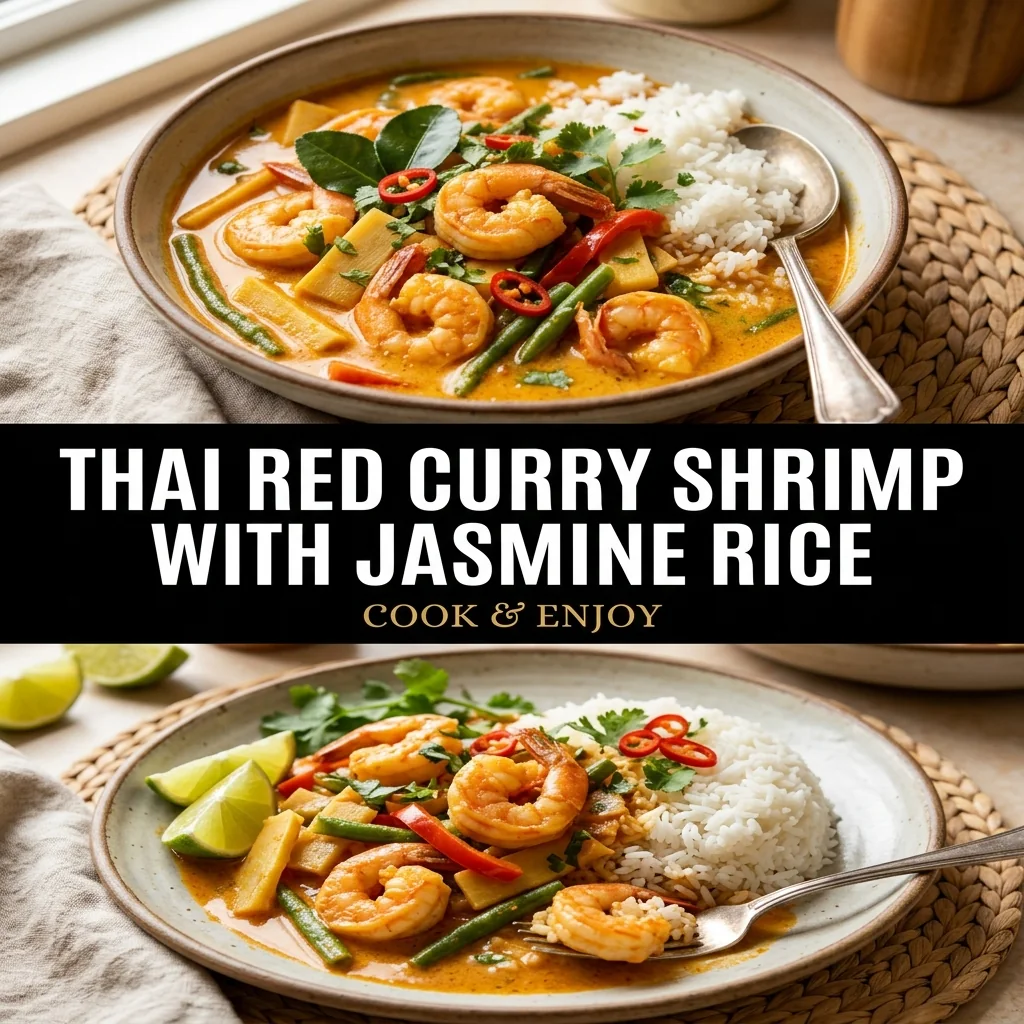
WHY MAKE IT
A little comfort, a lot of flavor.
Thai Red Curry Shrimp with Jasmine Rice brings together bold aromatics and luxurious textures in a quick skillet preparation. The foundation of this curry relies on quality red curry paste, rich full-fat coconut milk, and savory seasoning from fish sauce balanced by sweet maple. Plump shrimp act as an ideal vehicle for the spicy broth, cooking quickly to maintain a sweet, succulent bite. Tender bamboo shoots and crisp red bell peppers add textural contrast to the silky coconut broth. Ladled over a bed of fragrant steamed jasmine rice, this complete dish offers balanced heat, subtle sweetness, and refreshing citrus brightness in every spoonful.
Balancing Thai Flavors Accurately
Traditional Southeast Asian curry relies on harmony between four primary flavor pillars: salty, sweet, sour, and spicy. In this recipe, the halal-certified red curry paste provides assertive heat and deep allium undertones. Halal-certified fish sauce contributes complex salinity, while maple syrup rounds out the fiery edges. The final addition of fresh lime juice off the heat provides an essential sour punch that prevents the rich coconut milk from feeling heavy. Tasting the finished curry before serving lets you adjust the sweet-salty balance to preference.
Shrimp Cooking Precision
Shrimp cook exceptionally fast and can quickly become rubbery if subjected to high, prolonged heat. By simmering the vegetables first, the sauce develops flavor before the protein is introduced. When the raw shrimp are placed into the hot sauce, reduce the flame to maintain a gentle simmer rather than a rapid boil. As soon as the raw gray color transforms into an opaque pink and the shrimp curve into loose 'C' shapes, remove the pan from heat. Overcooked shrimp will curl tightly into closed 'O' shapes, indicating moisture loss.
Jasmine Rice Technique
Properly cooked jasmine rice offers a delicate, fragrant floral aroma and a soft, slightly sticky texture that cradles curry broth perfectly. Rinsing the raw grains removes excess surface starch, preventing the finished rice from turning gummy in the saucepan. Respecting the five-minute resting period after simmering allows residual steam to distribute moisture evenly from the base to the top of the pot. Fluffing gently with a fork separates the grains cleanly without crushing them into a paste.
Before you start
Frying the red curry paste in coconut oil before adding the coconut milk is an essential technique known as cracking the curry. This process releases fat-soluble aromas from the chili, galangal, lemongrass, and coriander. To prevent overcooking the delicate shrimp, introduce them only after the vegetables have softened to tender-crisp. Remove the skillet from heat immediately once the shrimp turn opaque and curl into loose C shapes.
THE RECIPE
Thai Red Curry Shrimp with Jasmine Rice
4 servings · 15 minutes preparation · 20 minutes cooking · 5 minutes cooling, chilling or resting
Ingredients
Step-by-step instructions
- Rinse the jasmine rice in a fine-mesh sieve under cold water until the runoff is clear, then combine with 2 1/4 cups water and 1/4 teaspoon salt in a medium saucepan.
- Bring the rice to a boil over medium-high heat, cover with a tight-fitting lid, reduce heat to low, and simmer for 15 minutes undisturbed.
- Remove the rice from heat and let it rest, covered, for 5 minutes before fluffing with a fork.
- While the rice cooks, heat the coconut oil in a deep 12-inch skillet or wok over medium heat.
- Add the red curry paste to the hot oil and fry, stirring constantly, for 1 to 2 minutes until fragrant and the oil separates slightly from the paste.
- Gradually pour in the full-fat coconut milk while whisking to dissolve the red curry paste into a smooth, creamy sauce.
- Add the sliced red bell pepper, zucchini half-moons, and drained bamboo shoots to the simmering curry; cook for 4 minutes until vegetables are just tender-crisp.
- Stir in the halal-certified fish sauce and pure maple syrup, then add the peeled shrimp in a single layer into the simmering sauce.
- Simmer the shrimp gently for 3 to 4 minutes, turning once, until pink, opaque, and registering 145 F / 63 C internally.
- Remove the skillet from heat, stir in the fresh lime juice and fresh basil leaves until wilted, and ladle the curry generously over bowls of warm jasmine rice.
Kitchen notes
Frying the red curry paste in coconut oil before adding the coconut milk is an essential technique known as cracking the curry. This process releases fat-soluble aromas from the chili, galangal, lemongrass, and coriander. To prevent overcooking the delicate shrimp, introduce them only after the vegetables have softened to tender-crisp. Remove the skillet from heat immediately once the shrimp turn opaque and curl into loose C shapes.
Storage & make-ahead
Refrigerate leftovers promptly within 2 hours in an airtight container for up to 2 days. Store rice and curry separately if possible to prevent the rice from absorbing all the sauce. Reheat gently in a small saucepan over medium-low heat until steaming and heated to 165 F / 74 C throughout.
An original recipe guide inspired by themes in our Pinterest research. Recipe has not been independently kitchen-tested. AI-generated image is illustrative; your finished dish may look different.
Frequently asked questions
What brand of red curry paste should I use?
Choose a halal-certified Thai red curry paste such as Aroy-D or Mae Ploy (ensure packaging bears appropriate certification marks). Verify the ingredient list contains no unlisted additives or animal-derived ingredients beyond conventional spices and dried chilies.
Can I use light coconut milk instead of full-fat?
While light coconut milk can be used to reduce fat content, the curry sauce will be significantly thinner and less rich. Full-fat canned coconut milk creates the characteristic velvety body necessary to coat the rice and shrimp properly.
Can I prepare the curry base in advance?
Yes, the curry base with vegetables can be simmered up to 24 hours in advance and stored in the refrigerator. When ready to serve, reheat the curry to a simmer, then drop in the raw shrimp and cook for 3 to 4 minutes until cooked through.


