WHY MAKE IT
A little comfort, a lot of flavor.
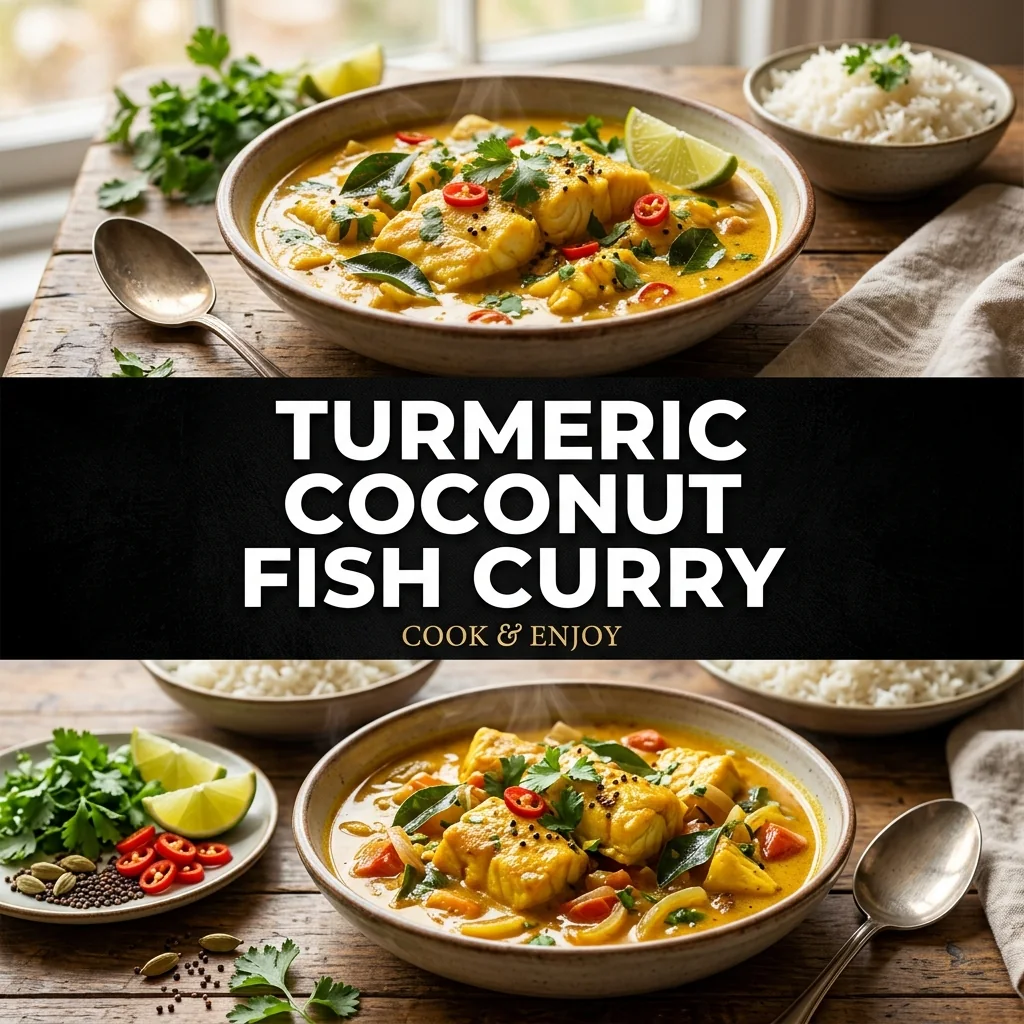
Turmeric Coconut Fish Curry is a soothing, deeply fragrant dish inspired by coastal South Asian culinary traditions. Golden turmeric provides both brilliant color and an earthy, warm foundation, beautifully complemented by the richness of full-fat coconut milk. Fresh ginger, minced garlic, and aromatic curry leaves bloom in oil to create an intricate aromatic layer that permeates the entire stew. Selecting a firm white fish ensures that the cut portions hold their structural integrity while poaching gently in the spiced liquid, emerging tender, moist, and infused with savory warmth. Finished with a squeeze of fresh lime juice to cut the creamy coconut base, this curry delivers balanced comfort and vibrant presentation suited for weeknight suppers or casual weekend gatherings.
Choosing the Best Fish for Simmering
For curries cooked in a simmering liquid, firm-fleshed white fish is essential. Varieties such as barramundi, wild cod, haddock, or sea bass hold up exceptionally well without disintegrating upon contact with heat. Cut the fish into uniform 1 1/2-inch pieces so that all portions cook at the exact same pace. Seasoning the raw fish lightly with salt and turmeric before it enters the pot seasons the interior flesh directly and enhances its golden appearance before it submerges into the coconut bath.
Blooming Aromatics and Spices
The foundation of an aromatic curry lies in blooming the spices in hot fat. Sautéing onions until completely tender establishes natural sweetness that tempers the sharpness of ginger and garlic. Adding fresh curry leaves directly into the warm oil releases their distinct herbal, citrus-like essential oils. The ground spices—turmeric, coriander, cumin, and cayenne—must be toasted briefly in the hot oil for 30 seconds to dissolve their fat-soluble flavor compounds before liquids are introduced, avoiding any raw, gritty spice taste in the finished broth.
Balancing the Coconut Broth
Using full-fat canned coconut milk creates an unctuous body that coats rice and seafood effortlessly. Thinning the coconut milk with halal-certified vegetable broth maintains a fluid, slurpable consistency rather than a heavy paste. Keep the liquid at a gentle, rolling simmer rather than a rapid boil, as excessive heat can cause coconut fats to separate and curdle. The final addition of fresh lime juice off the heat provides an essential burst of citric acid that cuts through the coconut richness, elevating the subtle sweetness of the fish.
Before you start
Handle the fish chunks with care once added to the simmering curry broth. Vigorous stirring will break the delicate fillets into small shards. Instead of stirring with a spoon, gently tilt and swirl the Dutch oven or use a wide silicone spatula to ladle the golden broth over the tops of the fish pieces during the final few minutes of gentle cooking.
THE RECIPE
Turmeric Coconut Fish Curry
4 servings · 15 minutes preparation · 18 minutes cooking · 2 minutes cooling, chilling or resting
Ingredients
Step-by-step instructions
- Season the cut fish chunks evenly with 1/2 teaspoon of fine sea salt and 1/2 teaspoon of ground turmeric, setting aside while preparing the curry base.
- Heat 2 tablespoons of neutral cooking oil in a large 4-quart Dutch oven or deep skillet over medium heat.
- Add the diced yellow onion to the hot oil and sauté for 5 minutes, stirring frequently until translucent and soft.
- Add the minced garlic, grated ginger, and 10 fresh curry leaves, cooking for 1 minute until fragrant without browning the garlic.
- Stir in the remaining 1 teaspoon of ground turmeric, ground coriander, ground cumin, cayenne pepper, and the remaining 1/2 teaspoon of salt, toasting the dry spices in the aromatics for 30 seconds.
- Pour in 1 cup of halal-certified vegetable broth and 1 can of full-fat coconut milk, stirring thoroughly to scrape up any browned spices from the bottom of the pot.
- Bring the broth to a gentle simmer over medium heat and cook uncovered for 5 minutes to allow the flavors to meld and deepen.
- Carefully lower the seasoned fish chunks into the simmering broth in a single layer, reduce heat to medium-low, cover, and gently simmer for 5 to 6 minutes until the fish flakes and reaches an internal temperature of 145°F (63°C).
- Remove from the heat, let rest for 2 minutes, stir in 1 tablespoon of fresh lime juice, and garnish with chopped fresh cilantro before serving.
Kitchen notes
Handle the fish chunks with care once added to the simmering curry broth. Vigorous stirring will break the delicate fillets into small shards. Instead of stirring with a spoon, gently tilt and swirl the Dutch oven or use a wide silicone spatula to ladle the golden broth over the tops of the fish pieces during the final few minutes of gentle cooking.
Storage & make-ahead
Allow leftover curry to cool near room temperature and refrigerate in an airtight container within 2 hours. Consume safely within 2 days. To reheat, transfer the curry to a small saucepan over medium-low heat and warm gently until the fish and coconut broth reach a safe reheating temperature of 165°F (74°C). Avoid boiling during reheating, which can break the coconut milk emulsion.
An original recipe guide inspired by themes in our Pinterest research. Recipe has not been independently kitchen-tested. AI-generated image is illustrative; your finished dish may look different.
Frequently asked questions
Can I use light coconut milk instead of full-fat?
You can use light coconut milk, but the resulting curry broth will be noticeably thinner and less velvety. If you choose light coconut milk, consider reducing the vegetable broth to 1/2 cup to maintain adequate body.
What can I substitute for fresh curry leaves if unavailable?
While fresh curry leaves have a unique aroma, you can substitute fresh kaffir lime leaves or a strip of fresh lime peel combined with a pinch of fresh basil to bring an aromatic herbal brightness to the simmering broth.
How do I know the fish is fully cooked?
The fish is thoroughly cooked when it turns completely opaque and registers 145°F (63°C) on an instant-read digital food thermometer inserted into the thickest piece, typically taking 5 to 6 minutes of gentle covered simmering.


