WHY MAKE IT
A little comfort, a lot of flavor.
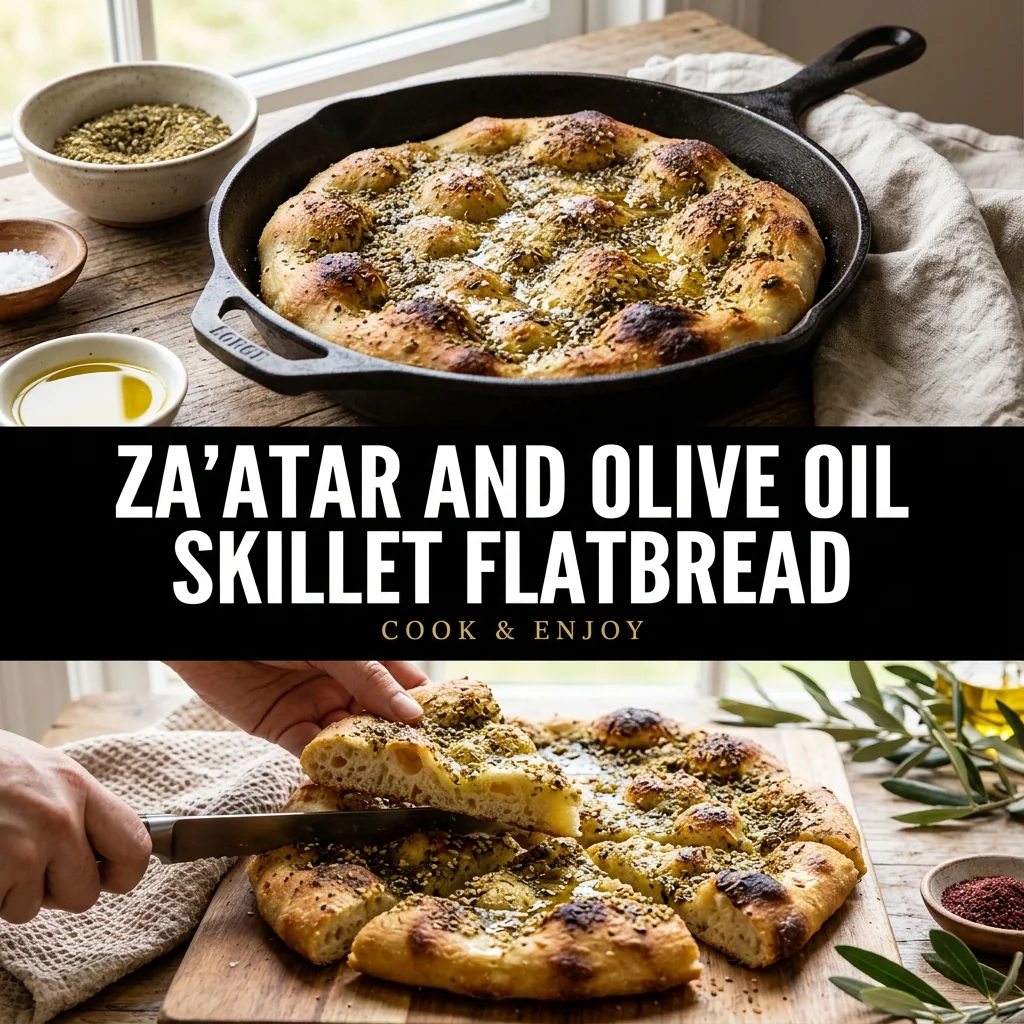
Freshly made flatbread is a cornerstone of Levantine cuisine, offering an immediate vehicle for aromatic herbs and rich olive oils. This yeast-free version utilizes lactic acid from whole-milk yogurt paired with baking soda and baking powder to generate instant lift, resulting in a remarkably tender crumb without extensive proofing times. Cooked rapidly on a screaming-hot cast-iron skillet, the dough puffs dramatically, producing attractive charred spots that lend an authentic hearth-baked aroma. Brushing the piping-hot flatbread directly with a fragrant mixture of wild thyme za'atar and virgin olive oil awakens the pungent oils of the herbs, the tang of sumac, and the nutty crunch of roasted sesame seeds.
The Science of Yogurt Dough
Using yogurt as the primary liquid transforms dough mechanics. The acidity of cultured dairy relaxes gluten strands, yielding an extensible dough that rolls out easily without snapping back. Furthermore, yogurt's milk fat and proteins coat starch molecules, retaining moisture during intense, rapid skillet baking. The interaction between acidic lactic cultures and alkaline baking soda generates immediate carbon dioxide bubbles, which expand vigorously the moment dough hits the radiant heat of the cast-iron pan.
Selecting and Using Authentic Za'atar
Authentic za'atar centers around wild thyme (*Origanum syriacum*), distinguished by its pungent, herbal aroma that surpasses common culinary thyme. Blended with acidic, ruby-red sumac and nutty toasted sesame seeds, high-quality za'atar requires no cooking; in fact, cooking za'atar directly on the skillet burns the delicate sesame seeds and scorches the herbs. Applying the za'atar-oil paste immediately upon removing the bread from the skillet preserves bright floral notes while gently warming the mixture.
Mastering the Cast-Iron Skillet Bake
Cast iron is the preferred vessel for stovetop flatbreads due to its unmatched heat retention. A pan that is insufficiently hot will dry out the dough before it has time to blister, producing a tough, leathery texture. Heat the skillet over medium-high for at least 5 minutes before dropping in the first flatbread. If the pan begins smoking excessively between rounds, reduce the burner slightly to maintain consistent surface heat without charring the flour prematurely.
Before you start
Do not oil the cast-iron skillet prior to cooking. A dry, hot cast-iron surface creates quick blistering and characteristic charred spots without frying or stiffening the outer crust. Stacking the cooked flatbreads underneath a folded clean tea towel traps their internal steam, ensuring the crumb remains supple, flexible, and tender rather than dry and cracker-like.
THE RECIPE
Za'atar and Olive Oil Skillet Flatbread
6 servings · 20 minutes preparation · 20 minutes cooking · 30 minutes cooling, chilling or resting
Ingredients
Step-by-step instructions
- In a large mixing bowl, whisk together the all-purpose flour, baking powder, baking soda, and fine sea salt until uniform.
- Add the plain whole-milk yogurt and 2 tablespoons of olive oil to the dry ingredients. Mix with a sturdy wooden spoon or clean hands until clumps form, then drizzle in 2 to 3 tablespoons of lukewarm water as needed until a soft, cohesive dough forms.
- Turn the dough onto a lightly floured surface and knead gently for 3 to 4 minutes until smooth and pliable. Divide into 6 equal portions (about 100 g each), roll into neat balls, arrange on a plate, cover with a clean kitchen towel, and rest at room temperature for 30 minutes.
- While the dough rests, prepare the topping in a small bowl by stirring together the 4 tablespoons of za'atar blend and 60 ml of extra-virgin olive oil until a pourable, dark green paste forms.
- Heat a heavy 10-inch cast-iron skillet over medium-high heat until hot. On a lightly floured board, roll one dough ball out into an 8-inch round roughly 1/8-inch thick, dusting off excess loose flour.
- Carefully lay the rolled dough round into the dry skillet and cook undisturbed for 90 to 120 seconds until large bubbles inflate across the top and charred blisters form underneath. Flip the flatbread using tongs and cook the second side for 60 to 90 seconds until cooked through.
- Transfer the hot flatbread to a clean plate, immediately brush 1 generous tablespoon of the prepared za'atar-oil paste across the warm blistered surface, and sprinkle lightly with fresh parsley. Repeat with the remaining dough balls, stacking the flatbreads under a clean towel to keep them soft, and serve warm.
Kitchen notes
Do not oil the cast-iron skillet prior to cooking. A dry, hot cast-iron surface creates quick blistering and characteristic charred spots without frying or stiffening the outer crust. Stacking the cooked flatbreads underneath a folded clean tea towel traps their internal steam, ensuring the crumb remains supple, flexible, and tender rather than dry and cracker-like.
Storage & make-ahead
Store leftover cooled flatbreads in an airtight zip-top bag at room temperature for up to 2 days, or refrigerate for up to 4 days. Reheat individual flatbreads in a hot, dry skillet for 30 to 45 seconds per side until hot and flexible, reaching 165°F (74°C). Flatbreads can be frozen between sheets of parchment paper for up to 2 months; warm directly from frozen on the stovetop. Refrigerate perishable leftovers within 2 hours of preparation (within 1 hour in temperatures above 90 F / 32 C).
An original recipe guide inspired by themes in our Pinterest research. Recipe has not been independently kitchen-tested. AI-generated image is illustrative; your finished dish may look different.
Frequently asked questions
Can I use Greek yogurt instead of standard whole-milk yogurt?
Greek yogurt is thicker and strained of whey, so if using it, dilute 200 g of Greek yogurt with 40 ml of water to achieve the proper hydration level for a soft, pliable dough.
Why did my flatbread fail to puff up in the skillet?
Lack of puffing usually stems from an insufficiently hot skillet or rolling the dough too thin. Ensure your pan preheats thoroughly and keep dough thickness around 1/8-inch so trapped steam can expand.
Can I bake these flatbreads in the oven instead of a skillet?
Yes. Place a baking steel or heavy stone on the top rack of your oven, preheat to 500°F (260°C), and bake rolled rounds for 3 to 4 minutes until puffed and blistered.